
How to Provide Emotional Safety, Empathy, Connection and Rebuild Trust After Betrayal | Become the Husband Your Marriage Needs (with Larry Hagner)


Have you ever found yourself in a conversation with your wife where you're genuinely trying to help, but somehow everything you say seems to make things worse? She's upset about something, you offer what seems like a perfectly reasonable solution, and suddenly she tells you that you're not listening. You feel confused, frustrated, or even attacked. You're trying to make things better. Why can't she see that?
Or perhaps your marriage has been deeply affected by pornography addiction, dishonesty, or emotional disconnection. You love your wife, and you want to make things right. But when she expresses her hurt, you become defensive, overwhelmed, or unsure what to say.
My friend, learning how to be a better husband isn't simply about loving your wife more. It's about developing the skills that allow her to actually experience that love.
I recently sat down with Larry Hagner, founder of The Dad Edge and author of
The Pursuit of Legendary Fatherhood, to discuss how men can become more emotionally mature, connected, and capable husbands and fathers.
We explored emotional safety in marriage, empathy, communication, emotional regulation, and something I believe is particularly important for pornography addiction recovery: learning to become comfortable with difficult emotions rather than continually trying to escape or control them.
Let's talk about what it actually takes to become the husband your marriage needs.
Being a Better Husband Is a Skill You Can Learn
One of my favorite things Larry teaches is that being a good husband and father isn't simply something you're naturally good at. It's a collection of skills that can be learned and developed.
Think about this for a moment. If you wanted to become a surgeon, you'd spend years studying and practicing under the guidance of experienced professionals. If you wanted to become a skilled athlete, you'd find a coach, learn the fundamentals, and practice consistently.
Yet when it comes to marriage, we often expect ourselves to simply know what to do.
We assume that because we love our wives, we should instinctively know how to communicate, navigate conflict, provide emotional support, and create healthy relationships.
And when we struggle, we conclude that we're inadequate husbands.
Larry learned this lesson through a painful experience in his own life. Having grown up in an abusive environment, he promised himself that he would never repeat the patterns he'd experienced as a child. Yet years later, after reacting harshly toward his young son, he saw his son respond to him with fear.
It was a devastating moment of recognition. He was beginning to become the very man he'd promised himself he would never become.
Rather than hiding from what happened, Larry began asking himself what he needed to learn. That journey eventually became The Good Dad Project, which grew into The Dad Edge.
What I appreciate about Larry's story is that he doesn't position himself as a man who has everything figured out. He's a man who recognized where he was falling short and committed to growing.
And that's what I want you to understand.
Your past may explain why you struggle with certain relationship skills, but it doesn't determine who you must become.
You can learn patience. You can develop empathy. You can become more emotionally available. You can learn how to listen to your wife without becoming defensive.
These are skills, my friend. And skills are developed through practice.
The Hidden Pattern Keeping You Emotionally Disconnected
Many men struggling with pornography addiction also struggle with emotional intimacy. But this connection isn't always obvious.
We often think of pornography addiction as an isolated behavior that needs to stop. Yet compulsive pornography use can also be part of a much larger pattern of emotional avoidance.
Imagine coming home after a stressful day. You're exhausted, frustrated, and overwhelmed. Your wife approaches you with something difficult she's experiencing. Perhaps she's upset about how you've handled a situation with the children.
Immediately, something inside you tightens.
You feel criticized. Maybe you feel inadequate or ashamed. Your mind begins searching for a way out of the conversation.
So you defend yourself, explain your intentions, minimize her concerns, or withdraw.
She feels dismissed, and you feel increasingly disconnected.
Later that evening, you're sitting alone, feeling misunderstood and frustrated. Your mind begins looking for relief. Perhaps you reach for your phone, scroll through social media, lose yourself in entertainment, or experience a craving for pornography.
Notice the pattern.
Discomfort leads to defensiveness. Defensiveness leads to disconnection. Disconnection creates more discomfort. And discomfort creates a greater desire to escape.
This is why I teach that lasting pornography addiction recovery involves much more than simply resisting cravings. We need to build the emotional and relational skills that help us navigate life without continually seeking escape.
And one of the most important places to practice those skills is in our marriages.
How to Listen to Your Wife Without Trying to Fix Everything

Larry shared a humorous video called It's Not About the Nail. In it, a woman complains about a persistent pain in her head while an enormous nail is visibly sticking out of her forehead.
Her husband points out the obvious solution: Remove the nail.
But she becomes frustrated because she doesn't feel heard.
It's a funny illustration of something that happens in marriages constantly.
When our wives share their struggles, many of us instinctively move into problem-solving mode. We identify what's wrong and immediately begin offering solutions.
Larry points out that this tendency often comes from a genuinely loving place. We want to protect the people we love. We don't want to see them suffering, so we try to remove the source of their pain.
But here's the misunderstanding: Your wife may not be asking you to solve her problem. She may be asking you to connect with her.
Sometimes she needs someone who will listen, understand, and remain present while she works through what she's experiencing.
This requires us to become comfortable with something that many men find extraordinarily difficult: being present with a problem without immediately trying to eliminate it.
Larry offers a wonderfully simple way to approach these conversations. When your wife begins sharing something difficult, you can ask whether she'd prefer that you listen or help her explore possible solutions together.
You might say, "That sounds really frustrating. Would it be more helpful if I just listened right now, or would you like us to work through some solutions together?"
Notice what changes. You're no longer deciding what she needs. You're becoming curious about what would actually help her.
And if she wants you to listen, that's your assignment.
Not to plan your response. Not to prepare your defense. Not to solve the problem before she's finished explaining it.
Simply listen.
Emotional Validation in Marriage: Helping Your Wife Feel Seen, Heard, and Safe
Larry explains that three especially important relational needs are to feel seen, heard, and safe.
Now, I want to clarify something. These aren't needs that only women experience. We all want to feel understood, accepted, and emotionally safe in our relationships.
But how often do we actually create that experience for our spouses?
Emotional validation is the practice of recognizing and acknowledging another person's emotional experience without immediately judging, correcting, or dismissing it.
Let's say your wife tells you she's feeling overwhelmed by responsibilities around the house.
Your first instinct might be to explain how much you've been doing or point out that certain responsibilities are already being handled.
But imagine responding differently.
"That sounds exhausting. I can understand why you're feeling overwhelmed. Tell me more about what's been weighing on you."
You've accomplished something important. You've acknowledged her experience instead of immediately shifting the conversation toward yourself.
And here's something Larry emphasizes: Empathy does not require agreement.
You can understand someone's frustration without agreeing with every conclusion they've reached. You can validate someone's sadness without accepting responsibility for things you haven't done.
But when you've genuinely caused harm, empathy also means acknowledging your responsibility rather than hiding behind technical disagreements.
Research and relationship education from The Gottman Institute similarly emphasize the value of listening, emotional attunement, and responding to a partner's feelings with care.
One of the most helpful questions Larry and I discussed is remarkably simple: "Tell me more."
Rather than asking, "Why are you so upset?" which can sometimes sound accusatory, invite your wife to share more about her experience.
"Tell me more about what that felt like for you."
These words communicate something powerful: I'm interested in your experience, and I'm willing to understand it.
How to Make Your Wife Feel Emotionally Safe
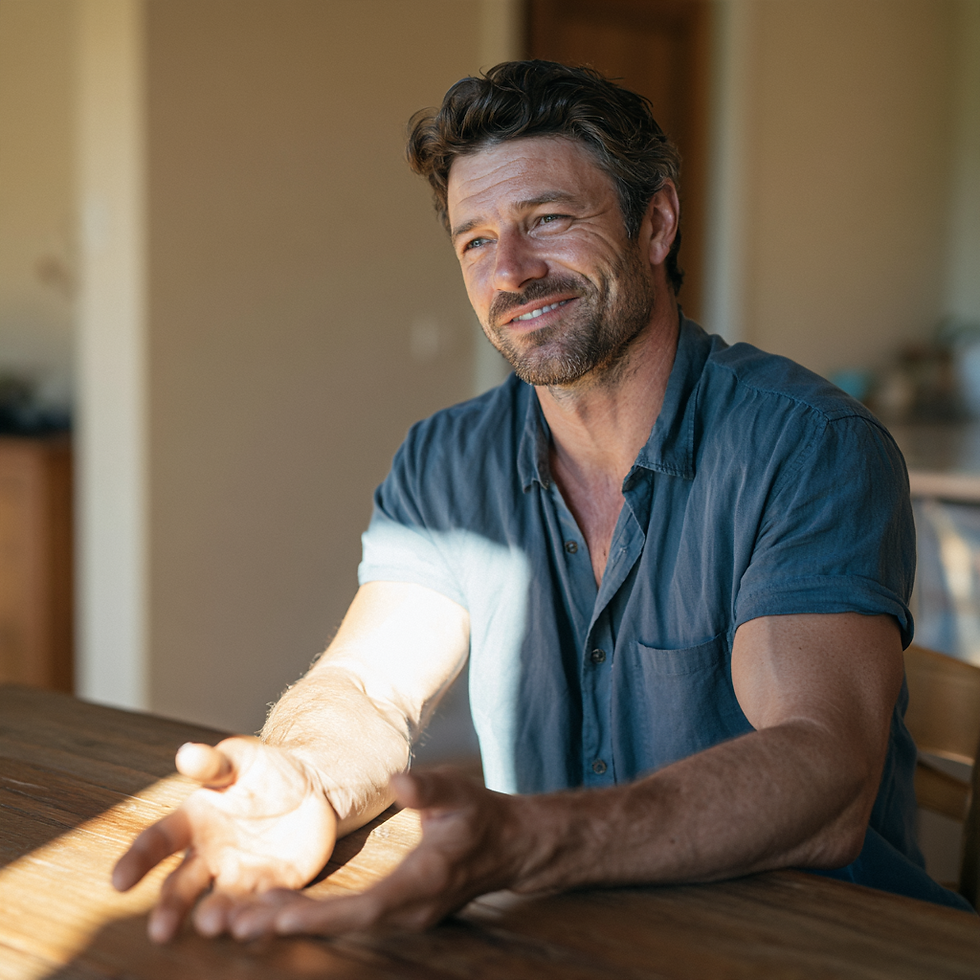
Emotional safety in marriage means that both partners can express their thoughts, emotions, needs, and concerns without fearing humiliation, contempt, retaliation, or unnecessary defensiveness.
It doesn't mean that difficult conversations disappear. In fact, emotionally safe relationships often make room for difficult conversations precisely because both people are willing to engage honestly.
Larry shared several practical ways men can help create psychological safety in marriage.
One involves paying attention to our choice of words. Instead of saying, "You seem really frustrated," we might say, "That situation sounds frustrating."
It's a subtle distinction, but Larry explains that focusing on the situation can sometimes feel less exposing than labeling the person.
He also emphasizes the importance of tone and body language.
Imagine your wife approaching you with something important. You cross your arms, sigh impatiently, and say, "Okay, what is it?"
Now imagine sitting down, relaxing your shoulders, looking at her with genuine interest, and asking, "What's going on? I'm listening."
The words matter, but so does the emotional atmosphere surrounding them.
Larry also recommends considering physical positioning during difficult conversations. Sitting beside one another or taking a walk together may sometimes feel less confrontational than sitting directly across from each other.
None of these techniques should be used to manipulate your wife's response. They're invitations to communicate genuine openness.
The goal isn't to make her feel safe so she'll stop being upset with you. It's to become someone who consistently behaves in ways that support emotional safety.
Stop Trying to Control Your Wife's Emotions
Now we come to one of the most important insights from my conversation with Larry.
Sometimes our desire to help our wives feel better is actually a desire to make ourselves feel better.
I know that sounds uncomfortable. But I've had to confront this pattern in my own marriage.
For years, when my wife experienced fear, sadness, anxiety, or frustration, I often felt an urgent need to make those emotions disappear.
I told myself it was because I loved her and didn't want her to suffer.
And that was partly true.
But eventually, I began recognizing something else: Her discomfort was creating discomfort inside me. And rather than learning how to tolerate that experience, I was trying to control hers.
Think about what happens when your wife is upset with you. Perhaps a part of you feels ashamed, inadequate, or afraid of rejection. That part may desperately want her to calm down, forgive you, or recognize your good intentions.
Not necessarily because those things are best for her, but because you want relief from what you're feeling.
Larry describes this pattern as attempting to manage another person's emotions to avoid our own discomfort.
Healthy emotional intimacy requires learning to let another person have their feelings without making those feelings a threat to our identity or emotional stability.
This doesn't mean abandoning boundaries or accepting abusive treatment. It means recognizing that another person's emotions belong to them, while our responses belong to us.
And this realization changes how we approach marriage.
Instead of asking, "How do I make her stop feeling this way?" we begin asking, "How can I remain loving, honest, and grounded while she's experiencing this?"
Grounded Masculine Presence: Staying Strong Without Becoming Detached
Larry uses a memorable analogy to explain grounded masculine presence.
Imagine a child struggling with intense emotions in a swimming pool. If you immediately jump into the emotional chaos yourself, you may become just as overwhelmed.
Instead, Larry encourages men to imagine remaining steady at the edge of the pool, offering support and guidance without becoming consumed by the other person's emotional state.
I appreciate this analogy, but I also think it needs an important clarification.
Being emotionally grounded isn't the same as being emotionally detached.
Earlier in my marriage, I often struggled to truly feel what my wife was experiencing. I could intellectually understand that she was sad, but I wasn't always capable of sitting beside her and sharing that sadness.
As I've learned to become more present with my own emotions, I've become increasingly capable of remaining present with hers.
Sometimes that means sitting beside her and crying together. Sometimes it means listening while she expresses anger or disappointment.
Healthy masculine strength isn't the absence of emotion. It's the ability to experience emotion without losing our capacity to choose how we respond.
We can be steady and compassionate. Strong and vulnerable. Grounded and deeply connected.
And becoming that kind of husband requires learning how to regulate our own internal world.

v
Emotional Regulation for Men: You Cannot Give What You Haven't Learned to Develop
One of the most important lessons I've learned through my own recovery is that emotional regulation isn't simply about calming yourself down.
It's about developing the ability to recognize, understand, tolerate, and respond constructively to your emotions.
For many years, I didn't know how to do this.
When I experienced sadness, fear, shame, or anger, my instinct was often to escape, resist, or control what I was feeling.
But as I've practiced emotional mindfulness, body awareness, and other forms of emotional regulation, I've developed a healthier relationship with those experiences.
And that has affected my marriage.
When my wife expresses a painful emotion, I can increasingly recognize what it's bringing up inside me without allowing that emotion to control my response.
Research supports the importance of this distinction. A study published in the Journal of Personality and Social Psychology found that habitual emotional suppression during daily interactions was associated with poorer relational experiences, while greater emotional expression was associated with stronger feelings of connection and relationship satisfaction.
Of course, this doesn't mean expressing every emotion impulsively or assuming that all forms of emotional expression are beneficial.
It means learning to experience our feelings consciously and communicate them responsibly.
If you'd like some practical tools for developing this capacity, I've written about somatic techniques for emotional regulation and managing porn cravings.
The more capable you become of remaining present with yourself, the greater your opportunity to remain present with the people you love.
Porn Addiction and Emotional Avoidance: Learning to Face What You've Been Escaping
Near the end of our conversation, Larry shared a powerful personal experience.
After suffering a serious knee injury, he was unable to accompany his family on a twelve-day vacation they'd been planning together.
He found himself alone at home, physically limited and emotionally struggling, while his family traveled without him.
Larry made a deliberate decision not to numb himself with alcohol, drugs, pornography, or other familiar forms of escape.
Instead, he chose to face whatever emotions emerged.
He described crying every day, sometimes experiencing profound grief and loneliness. It wasn't comfortable or easy. But he came away from that experience with a greater appreciation for what it means to face emotional pain rather than continually running from it.
This story speaks directly to the work I do with men recovering from pornography addiction.
Pornography can become a way of escaping emotions we haven't learned how to regulate. We may turn to it when we're lonely, stressed, inadequate, overwhelmed, or disconnected.
And while pornography may offer temporary relief or stimulation, it doesn't teach us how to navigate the experiences we're avoiding.
Over time, we can become increasingly dependent on escape rather than developing emotional resilience.
In No More Desire, I teach the Four Pillars of Recovery: Emotional, Neurological, Biological, and Relational, resting on a Spiritual Foundation.
What I want you to notice is how closely the Emotional and Relational Pillars are connected.
When you learn to experience your own difficult emotions without immediately escaping them, you're also developing the capacity to connect more deeply with your wife.
And when you build healthier relationships, you're creating opportunities for belonging, support, and meaningful connection that can strengthen your recovery.
This doesn't mean you should face overwhelming emotions entirely alone. Sometimes we need the help of a qualified therapist, a trusted mentor, or a supportive community.
But it does mean learning that discomfort isn't always something we need to eliminate.
Sometimes it's something we need to understand.
Rebuilding Trust After Porn Addiction Begins With Who You Become

For men whose marriages have been affected by pornography addiction, these relationship skills are particularly important.
Your wife may have experienced years of dishonesty, secrecy, broken promises, or emotional disconnection.
In that situation, simply telling her that you've changed may not mean very much.
She needs opportunities to observe your integrity, honesty, consistency, and emotional maturity through your actions.
This is where learning how to be a better husband becomes part of a much larger recovery journey.
You begin telling the truth even when it's uncomfortable. You learn to listen without becoming defensive. You recognize your own emotional needs without expecting your wife to manage them for you.
You become more capable of acknowledging the harm you've caused while continuing to take responsibility for your growth.
And importantly, you stop treating your wife's forgiveness, affection, or trust as rewards you're entitled to receive because you're working hard.
Trust cannot be demanded. Your wife has her own experiences, boundaries, and choices to make.
Your responsibility is to become trustworthy.
If you're navigating betrayal and trust repair, I explore those issues more extensively in How to Heal Your Marriage After Porn Addiction.
For this conversation with Larry, however, I want to emphasize something slightly different: These relationship skills aren't merely tools for repairing a damaged marriage. They're fundamental qualities of becoming a healthy, loving, emotionally mature man.
A Practical Exercise to Become a More Emotionally Available Husband
I don't want you to walk away from this article with nothing more than some interesting ideas. Understanding these principles matters, but applying them is what creates change.
So here's an exercise I'd encourage you to practice this week.
The next time your wife expresses a difficult emotion, notice what happens inside you before you respond.
Do you feel defensive? Anxious? Ashamed? Irritated? Do you notice an immediate desire to explain yourself, fix the situation, or end the conversation?
Begin by acknowledging that internal experience. You might silently recognize, "I'm feeling inadequate right now, and part of me wants to defend myself."
Take a moment to settle your body. Relax your shoulders. Breathe comfortably. Remind yourself that you can experience this discomfort without needing to make it disappear.
Then turn your attention toward your wife.
Rather than preparing your response, listen carefully to what she's communicating. Try reflecting back what you hear.
"What I'm hearing is that you've felt alone in handling this, and that my response made you feel like your concerns didn't matter."
Give her room to correct you or explain further.
Then acknowledge what makes sense about her experience.
"I can understand why that would feel hurtful."
Finally, invite more understanding.
"Tell me more about what that's been like for you."
This is a simple sequence I practice in my own marriage: Recognize what she's communicating, appreciate the emotional experience behind it, and investigate with genuine curiosity.
And when you've listened and understood, you can ask whether she'd be willing to hear your experience as well.
Notice that none of this requires you to surrender your own perspective, pretend to agree with something you don't believe, or become responsible for your wife's every emotion.
It requires you to become more present, patient, and emotionally responsible.
Start practicing this in ordinary conversations, not only during serious conflict. Ask about her day. Become curious about what matters to her. Pay attention to small opportunities for connection.
Over time, these everyday choices become part of the man you're learning to be.
Becoming the Husband Your Marriage Needs Is a Lifelong Pursuit

Larry's book is called The Pursuit of Legendary Fatherhood for a reason.
He explains that being a legendary father isn't some destination we eventually reach, where we can finally say we've mastered everything.
It's a pursuit.
And I believe the same is true of marriage.
I've been sober from pornography for more than eleven years, and I'm still learning how to become a better husband. I'm still recognizing old patterns, learning new skills, and discovering ways to show up with greater compassion, strength, and emotional maturity.
That's part of what makes this work so meaningful.
We don't have to become perfect men to build beautiful lives. But we do need to remain willing to grow.
Pornography addiction recovery is not merely about removing a destructive behavior. It's about building a life that supports sobriety from the inside out.
A life of emotional maturity, honest relationships, healthy discipline, meaningful purpose, and love.
And for those of us who believe in God, it's also an opportunity to become better stewards of the people, responsibilities, and relationships we've been entrusted with.
My friend, I want you to remember something: You don't become a better husband by waiting until you feel more confident, more loving, or more emotionally prepared.
You become a better husband by practicing the skills of love, even when they're uncomfortable.
You learn to listen. You learn to remain present. You learn to take responsibility. You learn to understand yourself and the people you love.
And gradually, your marriage has the opportunity to become something more than a relationship you're simply trying to preserve.
It can become a relationship in which you learn to genuinely see, understand, and love one another.
That's the kind of man I want to become. And that's the kind of life I want to help you build.
JOIN THE DAD EDGE ALLIANCE BEFORE NOVEMBER 30TH: https://thedadedge.com/join/
LARRY’S BOOK: The Pursuit of Legendary Fatherhood
LARRY’S SOCIAL: @thedadedge
Visit No More Desire Tools for Recovery for recovery tools and training, the free online community, my free eBook, Workshop, The RAIL Method ™ and more to help you break free from porn.
If you’re tired of trying to quit porn on your own, the No More Desire Academy gives you a structured path to recovery through coaching, brotherhood, practical tools, and step-by-step training. Learn more about the Academy.
If you want deeper, more personalized support, I also offer 1-on-1 porn addiction recovery coaching. Spots are limited. We’ll work directly on your patterns, emotional triggers, recovery plan, and long-term growth. Learn more about working 1-on-1 with Jake Kastleman.
God bless, my friend.
Recommended Episodes:
Disclaimer: This article provides educational coaching information and is not psychotherapy, medical advice, or couples counseling. If you or your spouse are experiencing abuse, serious psychological distress, or safety concerns, seek appropriate support from a qualified licensed professional.
Transcript for Episode 169: How to Become the Husband Your Marriage Needs | Emotional Safety, Empathy & Rebuilding Connection with Larry Hagner
Jake Kastleman (00:00.182)
Welcome to No More Desire, where we build a mindset and lifestyle for lasting recovery from porn. My name's Jake Castleman and I'm excited to dive in with you. Let's get started, my friend.
Jake Kastleman (00:17.144)
What does being a husband feel like for you? Or being a father? Do you feel like you're constantly falling short, like there's something you just haven't figured out yet? Being a husband and father are probably the hardest jobs that we have, my friend. They require patience, discipline, listening, compassion, organization, and more. After working with hundreds of men, I can say that these feelings of inadequacy, overwhelm, failure, not matching up are common. But overcoming this feeling is not about simply trying harder.
Nor is it something you are just naturally good at. Instead, these are learn skills for which we need the right tools and support. That's what myself and my guest Larry Hagner discussed today. Larry is the host of The Dad Edge, the number one podcast in the world for husbands and fathers. Larry has welcomed an impressive range of guests onto his show, including Matthew McConaughey, John Bernthal, Kirk Cameron, Mike Rowe, Chris Daughtry, and more. Larry's book.
The pursuit of legendary fatherhood is a beautiful and practical guide to fatherhood that has inspired me, and it is equally powerful for learning to be a great husband and man. Not only because he teaches practical skills and knowledge in these areas and is an authority in this field, but because he walks this journey alongside us, not above us, and he practices what he preaches. In this episode, we discuss hands-on skills, the art of listening.
Connecting, emotional validation, creating psychological safety in marriage, and learning to be both empathic and grounded, especially when our wife needs us to show up. This episode will help you become a more present, loving husband and father and find greater joy in your marriage and your life. If you're interested in working with Larry and his teen, they're running a promotion through the end of November, so now is the time to check it out. Links in the show notes. Before we dive in,
A reminder to join the Nomore Desire Brotherhood online community. Download my ebook or sign up for my free workshop. These resources are all free and they are your next step to get sober. You'll find each of them and more at nommodesire.com slash tools. All right, let's get started. Larry, what a joy to be here with you, man. as I told you, you know, I have a ton of respect for you. I think that the work that you're doing these days, especially these days with
Jake Kastleman (02:41.846)
So many men feeling isolated, feeling lost, feeling like they're not much matching up as husbands or fathers. You're not knowing how to show up in those roles. The work that you're doing and the authenticity of it and the vulnerability with which you do it and where you lead from like a participant in this whole work is it's been a big inspiration to me. We're going to talk about your book today, but just first off, man, I just want to let you know like what you're doing really makes a difference. So I appreciate.
It, wow, man. Well, I'm humbled. Thank you so much. And back at you. I mean, you're doing some pretty amazing work yourself. So I'm I'm honored that you say that.
Thanks, man. Thanks. So I wanna stop start by talking about the pursuit of legendary fatherhood. This book that you wrote, I think it came out about a has it been about a year?
Yeah, it's actually been one year and as as you and I are recording right now, the audio book just came out two days ago.
yeah, I saw that on there. I in fact I just looked it up today and I was like, I wonder if he has an audiobook and you do. Yeah. So that just came out. Nice. Who's the narrator? Did you do it yourself or did you have somebody do it? Yeah. You have the voice for it. You're, you know, a professional podcaster. So it's like you're used to this game anyway. So why not record it yourself, right?
Larry Hanger (03:44.238)
Yeah we mean.
Larry Hanger (03:51.79)
You know, so it's funny you mentioned that. I appreciate you saying that. I so when I first I wrote a book in two thousand fifteen, so going back almost twelve years ago or eleven years ago. it was it was called The Dad Edge. You I think it was a hundred and twenty pages, pretty simple stuff. And I d I was only podcasting for like a few months. And then I went ahead and I had I hired somebody to narrate that 'cause I just didn't feel up to it. And then I wrote another book
Two years ago called Spirit of Fatherhood, which is more of a faith-based approach to fatherhood. And that book actually came to me. I didn't go get that one. publisher came to me and asked me if I'd be willing to write a book on that topic. And I was like, wow, I feel like I'd really kick my coverage if I did that. But, you know, I prayed on it and did it. And unfortunately, I I couldn't read that book because they have this publishing house has a contract with an entire like narration contract.
company. So like I couldn't read that book. So like I was like when this book came out, I was like, I'm reading this book. Like no one else is gonna read it but me. And yeah, we just got done with it and just launched it.
Well, and I think it adds in so much of your like your own was you're the one who wrote it, right? So your emotion is in there when you narrate it. That's probably why I would imagine you really wanted to do the spirit of fatherhood is that contains your personality in the reading of it. So you didn't get to do that. Now you got to do that. I'm actually excited to check that out. I would like to to listen to it because it's for people who haven't read The Pursuit of Legendary Fatherhood.
I so I have to say this. I've been waiting to say this to you. The first two chapters, chapter two, that story that you tell about your dad, and I won't give it away to people, but it it hit so hard. It honestly, it really disturbed me. Like that experience that you had. And I know disturb sounds like a negative word, but it it shook me, man. And the way that you tell that story and how real it is, I felt like I was in it. And you had that happening to you at such a
Jake Kastleman (05:57.066)
A young, vulnerable age, I was, I felt devastated for you. I felt extremely angry with your father. I felt just this deep sadness. And it it impacted me for for days after reading that chapter. And for me, you know, kind of going full circuit, it circle it drove home for me just what a powerful and profound impact we have on our kids and how important my role is.
as a father and treating my s my sons well. Like it just it just really drove that home for me, man.
thank you, man. I appreciate that.
Yeah. So thank thank you for writing that.
Yeah, was it the story of like what happened on Christmas Eve and like that kind of thing? Yeah. Yeah.
Jake Kastleman (06:42.328)
That's the one. Yeah. That's the one. Yes. I j I just couldn't believe I I w again reading it, I was really taken aback. I was like, there's there's there's no way. Like I know these things happen and I've heard these stories, but to but to read that and kind of be in it with you, I was like, There's there's no way this happened. This is just it's it's so terrible. So anyway, I know it led to good things for you eventually, but but it was it was a powerful writing. Like it was a really powerful story to storytelling. That's one of
the gifts that you really manifest in this book, I feel like.
Thank you, man. Thank you. I I don't have many gifts, like I can't fix a car and you know, I I couldn't do a like a quadratic equation probably at this point. But I guess you know, the one gift that I do have people have told me over and over and I'm I'm blessed to hear that is I can tell a good story. So yeah.
It's it's a powerful gift, man. It really is. It really is. So there's a lot I want to talk about today. I really do want to center this episode, you know, for so many of the guys who are listening, they're in a situation where they've just they've devastated their wife, right? They've broken their trust. Their wife is going through betrayal trauma. They've been caught up in a pornography addiction. Maybe they've been with prostitutes, maybe they've been, you know, in multiple affairs. So these guys are coming from a place where I've really screwed up.
bad in a way that I can't describe in words, my wife is hurt and I'm trying to rebuild things. And then I also have spouses listening to this who are going through that right now. And so I want to focus like you have so much to say on fatherhood, so much, but you also have so much to say on marriage and husbandhood. Right. So that's really where I want to focus is kind of how to rebuild that trust and how to show up as a husband. And you do a great job in the book.
Jake Kastleman (08:32.066)
being very practical about like one of the things, one of the principles that I loved was husbandhood and fatherhood are skills, right? We need feeling love is important, but it's a skill that we can build. And I think that's empowering. I want maybe talk about for you why or how how you develop that understanding. And I know you describe this in the book, but talk to guys more about how you develop that understanding for yourself about being a skill.
It kind by accident, to be honest with you, right? Because it what one of my goals is to positively disrupt the perception of fatherhood and being a husband. And what I mean by perception is that just to throw out some some stats for you, right? Everybody knows the divorce rate's fifty percent. people don't know that the fifty percent that stay together.
Only one third of those couples can actually identify their relationship as fulfilling, working. They wouldn't really change much. It's amazing, right? The other two thirds that stay together in somewhat what we call roommate syndrome, where it's more like everything's logistical. There's not a whole lot of intimacy happening. We're we're somewhat good friends. We coexist, we co-parent. but to some degree it's like we feel like roommates or it's there's tension all the way to the point where where there's like extreme disconnection. Like these are two strangers living in the same house and
Usually the only two reasons they don't break up is because of, well, it's too financially devastating or this view we have to stay together for the kids. So if you really kind of do the math, right? Like if you if you're like if you're like Russell Crowe and Beautiful Mine, you're you're writing all the equations on the window and that kind of thing. What you really come up with is that only twelve percent of people that walk down the aisle and say I do can actually identify their relationship as working. That's like the same success rate as Buds for a Navy SEAL, right? It's ninety percent failure rate.
So I I I honestly believe after doing this work for the past fourteen years, I started Dad Edge in probably one of my darkest hours. Like, you know, happy to share anything about my childhood, but it was it was really abusive. You know, it was plethora of father figures came in and out. Didn't know my bio dad. He came back into my life at twelve very unexpectedly, left again, and then I was accidentally ran into him in a coffee shop twenty one years ago when I was thirty. So like that's a story in itself. But
Larry Hanger (10:53.676)
You know, when I first got married, I had I made three promises to myself because of my background. I was like, I'm only going to be married once. I'm going to be a good husband. I'm going to be a good dad. And I'm never going to hit my kids out of anger. Right. So I unfortunately, in the first probably six year if ten years of being married and six years of being a dad, I broke all those promises. Now I never did anything really extreme. Like I never was the drunk who was abusive, emotionally abusive, never put my hands on my kids.
But it was one night when my four year old who is now eighteen, almost nineteen, he he stepped out of line one night and I just hit the absolute rage button. And this is not to justify that action, but like I literally had the worst day of my career that day. I was in med device sales that day I lost one of my biggest surgeons who made up sixty percent of my territory. We were getting ready to move, so we were getting ready to buy a new house, so we needed money, obviously. And so if I wasn't gonna get fired.
Which I was fearful of, because you lose a customer like that, you're gonna let go. if if if worse worse if the best case scenario, I was gonna lose sixty percent of my income probably over the next eighteen months. So that was devastating. And I was like, How am I gonna tell my wife this? What if I lose my job? Like I was a mess that day. And my son stepped out of line that night, just being a four year old, and I just hit a rage and I s turned him around, I spanked him, and unfortunately I spanked him so hard he hit the ground. Luckily he didn't get hurt.
But if you if you read the back of my book, when I was first first I was gonna go through a publisher for this and then unfortunately the publisher went bankrupt. But so I I went ahead and self published it anyway. But like I he's like, Hey, you need to put a paragraph on the back of this book and the paragraph reads, Twelve years ago I became the monster that I swore to protect protect myself, protect my kids against at all costs. Mm mm and he his response was, You can't put that on the back of the book. I was like, Well, it's gone on the back of the book. So that's what's on there. And it got worse though.
So after I spanked him and he hit the ground, I immediately felt that shame, that remorse, that guilt. And I was like, what the hell have I just done? And then I went to go pick him up. And as I went to go pick him up, like my hands were open and he literally just closed his eyes and put his hands up in so much fear. Like, please don't hurt me again. And dude, that freaking crushed me, man. Because in that moment I saw my son, but in that moment I also saw me because like that was my reality. Like I was terrified of men, you know, when I was that age.
Larry Hanger (13:15.432)
And that was the night I actually started Dad Edge. And to get to your question about around skills, that night I went into my office and I was very emotional. And I was on Facebook of all things, you know, because when you're an adult and you want to distract yourself against, you know, things that you're experiencing or whatever, you just go and look at everybody else's highlight reel. And so I I saw this button on the left hand corner. Again, that's like two thousand twelve. Social media isn't what it is today. And it said create a page. And I was like, and I just hit that button.
And I I don't know why. I just I'm a very faith based person. I feel like I wasn't alone in that office that night. And I hit that button and the thing pops up and it says, What do you want to name your page? I and I gotta be honest with you, Jake. I didn't even think about it. I just typed the good dad project, those four words, the good dad project. And some people know this and I think a lot of people don't, is that was never supposed to be the name of an organization or or a company or whatever. It was me. I was the project. Like I needed all this help.
And to answer your question, it was in that moment that I was like, why am I good at some things in my life, or at least decently okay at some things in my life? And why am I struggling so much with this whole marriage thing and fatherhood thing? And nobody was talking about it, right? And and it plus, if you ask for help, you know, you're weak and that kind of thing, which I think is another lie that we tell ourselves. But I started looking at other areas of my life. So
I got a degree in fitness and sports medicine with a minor nutrition. So I can tell you everything there's known about the body. I can tell you everything about movement, about kinesiology, about nutrition. Always been a health nut for the majority of my life. I'm like, why am I a pretty fit person and I know everything about fitness? Well, I have a four year degree in it. And then I went into med device sales and I mean, dude, they put you through a ninety day training program before they ever let you in an OR with a with a surgeon.
So, and even at that point, they tell you, okay, now you're actually dangerous, right? Because you don't know what you don't know, but you know a little bit. So, like, and I started looking at other areas too. I'm like, look at a cop, right? 900 hours between a cadet and officer, 600 hours for a firefighter, 12 years for a general surgeon before they can start operating on people. Like, what's the common denominator? At the time I was doing martial arts for probably a little over a decade. And I was, I loved it.
Larry Hanger (15:35.726)
I was like, what's the common denominator with all this stuff? And I was like, the common denominator is there's an instructor, there's a curriculum, there's actually a community in most aspects, right? And there's skills that you learn. And I started thinking, I was like, well, fatherhood and being a husband, could it be the same? Like, I don't know. And so like I was just like, I made a commitment on that page.
I was like, I'm just gonna go out and learn one new thing every day. I'm whether it's reading a book or listening to a podcast or searching something up or just doing my own research to become better myself. And I would just post it on that page. And I didn't never did it for a following. I didn't even know what a following was. I still kind of actually don't, to be honest with you. I I just had a conversation with a guy who joined our group and he's like, You're great at marketing. I was like, that's a joke. I was like, because my team will tell you.
You were the worst mark you know nothing about marketing because ever I've never bought an ad. I've never bought followers. I don't even know how to do that. I was like, I literally just speak from my heart and I figure whatever is gonna happen is gonna happen. And so that page grew to over like 100,000 followers in a matter of like just a few months. I was like, why are these people following me? Like I don't know what the hell I'm doing. Like, and then I started being asked to speak at like,
churches and I'm like, why do they like the first person asked me to speak, I was why do you want me to speak? And they're we want you to come in and talk about how to be a good dad. I was like, my response was, I was like, you got the wrong guy. I was like, I do not know how to do this. Like I'm learning. I was like, but no, they're like, no, that's what we love. We really like how authentic you are. You're so actually self-deprecating, like to be honest. So anyway, that was 14 years ago. And what I can tell you is over the past 14 years is yes, that is the gap. It's like if you can learn
Different skills, like how to create environments of psychological safety with your kids. So they'll tell you everything and anything, right? How to ask better questions of your wife so you can elicit more connection and more intimacy with her. Even like the, like, even five years ago, right? I've been doing this work for this long. Five years ago, I finally learned a woman's three greatest needs from her husband is to feel seen, heard, and safe. I'm like, wow, okay, well, that makes a difference. And even though knowing that, I'm like, okay, well, how do I do that?
Larry Hanger (17:46.488)
Like how do I make her feel seen? How do I make her feel heard? How do I make and what does all that even mean? And then it's learning that too. So those are just a scratch on the surface of just some skills. I mean, even patience, right? It's it's emotional regulation and it's emotional resilience. It's just kind of marketed as patience, right? But if you can learn those skills of emotional regulation and emotional resilience, you actually will become a more patient individual. We just we identify ourselves as I'm just not that patient, right? But you can actually learn how to do it.
Quick pause here. If you've been struggling to quit porn, my friend, I'm here to tell you that you're not a bad person, you're not a bad husband, you're not simply selfish or perverted. These are lies that you're told. You can overcome porn addiction for good, but this does not come through just fighting cravings, staying busy, attending support groups, or just being more disciplined. The secret is this, and it's not that secret.
Your addiction to porn is a symptom of other key factors of your mindset and lifestyle. And by building a recovery ecosystem in your life, you can eventually lose the need for porn. Let me tell you a little bit about this. I work with guys in groups and one-on-one. I give them an ecosystem for recovery found through courses, community, and coaching. I call this intensive recovery.
I teach men step-by-step methods to process difficult emotions, how to relate to and respond to cravings without fighting, without panicking. I use IFS, CBT, mindfulness, and nervous system balancing practices to help guys regulate emotion. Then I also teach lifestyle changes that increase dopamine, transform relationships, and build daily routines and habits that support recovery. And this is not just information, we apply all of it.
Through hands-on exercises in a structured program. Overcoming porn may feel impossible. I get that, but building good habits that eventually remove it from the picture is possible. If you want to learn more, head to nomodesire.com/slash coaching. You'll find links to the academy and group coaching there, as well as a link to learn more about the one-on-one program and set up a free discovery call. I'd love to see you there, my friend. Back to the show.
Jake Kastleman (20:07.294)
I love that you talk about really being in this this dark place when you started the good dad project, right? And where you're like, I I was in the thick of this. I was doing this just so I could learn and so I could get better. And that's when I started Become a Good Man, which was before I began, which it was it which it was interesting when I saw you had the Good Dad project. That was however many years ago. I started with Become a Good Man, which eventually became No More Desire.
And when I started with become a good man, I was sober, but I was still struggling with cravings like all day, every day. Right. And I didn't, there was so much I didn't know. Right. And I started to learn. And as I taught other people, and as I eventually started coaching other people, I began learning myself more and more and more. And I was several steps ahead of where they were at as far as sobriety wise, but there was still so much that they were struggling with that I was. And that's still the case now in that.
there's so much that I'm continuing to learn. So I love talking about that from kind of the the learner being the teacher at the same time in many ways, where you grow along the way. Yeah. And that's again, that's it's something you do well in, you know, it shows that that vulnerability and that self-deprecation and and how you talk on your podcast and how you talk to men. And and I think I think we need that. Like we need brotherhood. We need other guys to say, I get it. We don't need somebody up on a pedestal that's like I've got everything figured out.
We need someone to meet us where we're at. So I appreciate that. Yeah. Yeah. So husbandhood, marriage, right? what would you say are a couple of the primary things that guys are really struggling as far as these skills that guys don't have in their marriage that that we're really in need of in this day and age?
Yeah. Thank you.
Larry Hanger (21:59.352)
So I'll you know, I'll I'll point everybody to a really funny YouTube video. That's a minute and forty two seconds. Go ahead. What do you think? Yeah, man. Yeah. But you want to know something like my wife calls this wasted brain space because I, you know, it's like I can remember movie quotes from like the nineties, but I can't remember where my keys are at. But the woman in that video, I'll I'll ask you this question. She's actually now a pretty big Hollywood star. She was an
I think I might already know what you're about. It's not it's not about the nail.
Larry Hanger (22:26.412)
Huge movie, huge. And she really like she's she's now pretty well known, but you know who she is?
No.
She's Phoenix in Maverick. She's the female pilot.
Gosh, yeah. I never would have made that connection. Yeah.
Yeah, yeah. I think that video was made in two thousand thirteen. So it was quite some time before Maverick came out. But when Maverick came out, I was like, God bless, that woman looks familiar. It was because I've seen her probably a thousand times because I show up that video to all my groups and all my clients, and I'm like, This is true. So, you know, like let let's just talk about something called emotional validation. Right. emotional validation, by the way, is in one of the things that we teach a lot is emotional va emotionally validating your wife through empathy. And, you know.
Larry Hanger (23:10.498)
Let's get clear on something really quick too. Brenn Brene Brown really is great about when it comes to empathy and and the the connection that empathy actually provides. And just to decipher some differences here. So, you know, sympathy is actually different than empathy. Like so when somebody says something, they're going through something, you're like, my gosh, I'm so sorry you're going through that. It it's really interesting because you've been told that and so have I. And when when we're told that, it's like, I don't know why, it just doesn't feel good to me. And Brene Brown actually explains, well, sympathy.
makes the one person who's like, I'm so sorry that's happening to you, and the other person's like down here, still like in the basement of of the of the feelings of it. And they feel like, yeah, you have no idea what I'm going through. It's like it's actually a really disconnecting thing. And we do this actually a lot when people that we know lose loved ones, right? I'm so sorry for your loss. but empathy is like, I know what it feels like to be where you're at. In fact, why wouldn't you feel the way you do because this to happen or that happened or whatever happened.
Like, tell me more about that. So, like, I'll I'll I'll unpack that and I'll explain that. But let's talk about the psychology of a man first and why he wants to fix. So if you watch that video, go watch the video, you'll see it. It's hysterical. It's absolutely hysterical. So this woman is talking and she's like, there's this pain, and you can't see her face yet. So it's like, there's this pain, and my head is always throbbing and it just hurts, and I just don't know what to do. I just don't know what to do. And the guy she's talking to is looking at her, you can't see her yet.
And he is just like completely befuddled. He's like, What is happening t in this situation right now? Are you kidding me? And then you see the woman's face and she's got like this huge carpenter nail sticking out of her head. And he just looks at her like she's nuts. And he's like, Well, you do have a nail sticking right out of your head. And she just gets fiery, right? Like because that's so the guy obviously sees the solution to the problem. Like we see that in conversations. And and then we wonder why, like,
If I'm helping my wife solve her problem, which by the way, I'm going to digress. Men solve problems for their wives, or they think that they need to solve problems for the wives because it actually comes from this really freaking beautiful place in us. It comes from the protector in us, right? We love her so freaking much. So, like the best thing we want to do is help her take away this pain because I don't want to see somebody I love so much, someone I care about so much go through pain. So let me help you solve this.
Larry Hanger (25:35.628)
So I can get you out of pain as quick as I can and be that protector. So it actually really, you know, men get a lot of slack for this, but it comes from such a freaking beautiful place. It comes from a loving place. But that here's the most important part. That's not how it's received. Right. And we always want to love and we always want to love somebody and how they're going to receive it, not necessarily in how we want to give it. So the way a woman interprets that is you're not listening to me.
You don't understand. In fact, I know you're not listening to me because you're thinking of solutions. You don't even understand how I feel. Like this played out so long in my own marriage. My wife would be like, you don't understand. I'm like, no, I do understand. Like we could do this. No, you don't. You're not hearing me. No, I'm hearing every word you're saying. And I'm telling you, like, this is what we could do about it. You don't get it. I'm like, what do I not get? I what? It is like the biggest scrambled eggs of your brain when you're in those conversations. So let's let's just unpack what's happening psychologically.
When your wife is coming to you and she's talking about something frustrating, whether it's maybe some drama in her friend group or she's having issues with the kids or like her mother or is your your mom or her mom is just driving her crazy or whatever it is, she's after one thing. And it's usually not those solutions. Connection. She wants to be connected. And the more you know how to connect with her, the more attractive you become. Right. And this, this really
throws us off because we're like, I'm not being of value here. I'm not being of service. So the best thing, so empathy, by the way, also doesn't necessarily mean agreement. It can, but a lot of people think, well, if I share that I understand how she feels, then I'm agreeing with her. Maybe I'm even enabling her into some degree. You can enable behaviors, but you don't necessarily enable feelings, right? So everybody understands what it feels like to be frustrated.
And the things that frustrate me may or may not frustrate my wife, and vice versa. But I understand the feeling of frustration. I understand the feeling of betrayal. I understand the feeling of heartache and stress and overwhelm. Right. So when I see my wife feel those feelings, the best thing I can do in that moment is just simply say, that sounds really heavy. my gosh. All right. That sounds really frustrating. And to be honest with you, I don't know anybody in your situation that.
Larry Hanger (27:53.144)
probably wouldn't be just as frustrated as you are. But please tell me more. What's going on? Now, in my mind, still I've been teaching this for years. In my mind, I'm like, I Larry, you're not being effective. Like, come on, man. Like so, but you actually are. The more she's talking, the more attractive you become because you are connecting with her. And by the way, here's the really great thing about using empathy with validation like that. Notice
Right.
Larry Hanger (28:21.654)
Emotions are always one word. So frustrated, overwhelmed, sad, happy, excited, all one word. So if you can identify what you think she might be feeling, when she hears that emotion, how it hits her is, my gosh, you see me. You're hearing me. And if you can knock those two dominoes, those two needs down, the third and the most important, safe, boom, falls. And the more she's talking, the more safe she feels.
the sexier you become. Now I'm not saying this out of manipulation because what you really want to do is just connect with her. Right. But hi the good news is is you don't usually have to solve a thing. I mean, studies have shown that 80% of the time you don't have to solve a thing. And the good news also is is if you're ever confused, I do this with my wife all the time, I'll I'll stop her and I'll say, Hey, just real quick, before you go any further, this sounds like it's a really heavy situation. And I want to make sure that I'm the best, you know, for you right now. So if you want me to just sit here and listen, I I got you.
Right, I got you. If you want to collaborate, now notice I said the word collaborate. I didn't say if you want me to tell you what to do, if you want to collaborate on solutions, we can do that too. Which one of those feels best to you? And notice I said which one feels best to you. I didn't say which one do you think is best because in that emotional state, women are all about their feelings. And so are kids. Kids are wired the exact same way. The same rules we're talking about apply to the kids. So when you say which one feels right, the good news is she's gonna tell you.
My wife will be like, I just need you to listen. Boom. Great. Okay. Not not much work in my brain needs to be done other than to continue to listen to you. But if she's like, I'd really like to collaborate on solutions, that's when I actually have to manually turn off solution mode and keep listening to her. And then when we get to solution mode, we can talk solutions. But yeah, that's that's one of of many things you can do. That one shift in your marriage will change conversations and connections in your marriage.
It's so powerful. I love the connect and collaborate. connection and collaboration you're talking about. Women want to be seen, heard, and safe. You know, a couple of things that I think of something that has been helpful that I've only learned very recently in my life because of a fantastic mentor. is to express to someone. So he's he's taught me to attune to my heart right when I'm listening to someone. Right. And to express to someone, I'll listen.
Jake Kastleman (30:47.702)
with my wife or with a friend or whoever it is, I'll say, and I'll notice what I feel for them. And I'll say, I feel a lot of sadness for you as you just shared that. Or I can see that that really like you feel angry when you say that. Or I can see there's or if I don't know, I can see there's a lot of emotion in that for you. Can you tell me more about what that's like for you? And you you say that continuously, tell me more about what that's like for you. And that's one of the things
with my clients, with my guys that I coaches is telling them to investigate, which is just that simple question when they're listening to their wife. Tell me more about what that, what that's like for you. Tell me how that feels. That one question, I think it's so simple and we can so easily screw it up and go off track and try to solve and fix. It's just opening up the door for someone to really truly let their emotions flow.
Right. And we have to be that open space. And I think that's one of those things, you know, call it stoicism or call it mindfulness or call it whatever you will of I'm gonna open up space and I'm just gonna fully as as Bernie Brown says, sit I'm gonna sit in this muck with you. I'm gonna go down in that pit with you and I'm just gonna be there next to you. That is so powerful.
Yeah.
You said something there that I want to make sure your audience heard because it was gold, really gold. I don't know if you meant to do it or not, but it's something that I write about in the book and it and most people will miss it. So I always tell guys when I'm coaching them, if you want to know why or more of what's going on, replace the three letter word why with three words tell me more. So, like for instance, if you say something like, that situation sounds infuriating, why are you so upset? Right. You you
Jake Kastleman (32:35.33)
It's like an interrogation.
This it that's exactly how it hits somebody's subconscious. People don't respond well to the word why. Psychologists have said that like when we're wide, like, you know, wide to death, that it brings us back to like when we were little kids and like, why did you do that? Like, what were you thinking? Like it's like this finger pointing thing. So you can like come with this like super curious tone, but the word why will hit the mind very, very differently. But tell me more. So why feels like this, like I'm pointing at you.
Tell me more feels like this, which is like my arms are open and this is an invite for more. So it hits very, very differently. So like whenever you say tell me more about that or tell me why that was so meaningful to you, even though I said the word why in there, but the tell me more, if you can preface it with that, it feels way better to people. It's way more connecting because the word why could be really disconnecting.
I like I also like that you say it goes from this pointing to this openness, right? The hands out. And that was that was another thing that I've been taught as well is is literally the posture of of open hands. Yeah. Right. And so in fact, this last week or so my my wife my wife was really angry about something. I don't remember what it was, but she was very, very frustrated. And so I you start to feel the kind of that heat in that building and I wanna get defensive and I want to go go fight, right? And
And and prove that I'm right. And so I'm breathing and I'm trying to calm down. And I sat down at the table with her and I and I sat with my hands open. She was like, I don't want to hold your hands right now. I'm like, you don't have to hold my hands. And I'm just, she doesn't know what I'm doing. She's why is he doing it? And I'm just holding my hands open to try to be open. And I was able to listen and effectively do what I try to teach guys to do, which is to reflect back, right? You know, after I've listened, so
Jake Kastleman (34:27.062)
What I've heard you saying is, and you you teach this as well, just a f a few words that I'll share or a couple things to reflect back to what she's just explained, and then to say, that makes sense to me. And so I say recognize it by reflecting that or reflect it, I mean, appreciate, and then investigate. Tell me more about what that's like for you. Or I heard you say this, tell me more about what you're experiencing. And that just opened up space for her to keep expressing the exact thing that part of me doesn't want to hear.
Right. Like I don't, like this is so uncomfortable for me right now. I don't want to feel it. But by reflecting and by appreciating and by investigating, I opened up more and more and she felt more and more relaxed to express. And then by the end, by listening to her, I was then able to say, Yeah, that all makes sense to me. Do you mind if I express some of the things that I've felt? And then she's actually open to receiving that. Right. And just that open posture, that really, that really did help me.
Yeah.
What you provided was an im it's another skill that we teach, which is an environment of psychological safety, which is that feels like more like an ab academic term. But what are the so people are like, What's an environment of psychological safety? A lot of people ask that. And I'm like, in the simplest terms, have you ever told somebody I don't know what it is about you, but I feel like I can tell you anything. That's one situation, right? Or you have a conversation with somebody
Or
Larry Hanger (35:57.484)
W let's just say it's at a coffee shop, you pour your heart out and then you get in your car and you're like, my God, I cannot believe like what what was I I told them so much, holy crap. And then you're texting them be like, I'm so sorry. I d I really I guess I felt really comfortable with you. I told you so much. What actually happened in that moment? That's an environment of psychological safety. So the environment of psychological safety is free from shame, blame, pain, and guilt, right?
And there are different things that we can do to help manufacture that space for people. This works great. And it's so when I say works, it I'm not trying to say it's like some Jedi mind trick or manipulation. Like the these are just psychological things that actually a human being responds to. So like, let's just talk about choice of words. So, like, for instance, choice of words is if somebody is feeling a painful emotion, right? And then there's positive emotions. That's kind of like how we identify them.
People don't like to feel painful emotions. They just don't like it. And they certainly don't like for other people to see that they're carrying those painful emotions. And and when I explained this to guys, they're like, What do you mean? I was like, Well, here's a perfect example. When you come home, you have a really bad day at work and you just feel like you're carrying the weight of the world on your shoulders. And then your wife is like, Are you okay? You don't look okay. And you're like, What do you I was like, what do you say? I'm fine. I was like, and then wh why do you say that? Well, I I don't want to burden her. I don't want to come off as weak. Exactly. You don't want to feel it, you don't want somebody else to see it.
So when someone's going through a painful emotion, one of the most important things to create more psychological safety is you shine the light on the situation, not on the person. So notice when I said that sounds really frustrating, I didn't say you sound really frustrated. Say that sounds really frustrating, it's more me and you against the thing versus me against your heavy emotion that I that I can see. So when people can be like, Yes, that makes me frustrated. I don't have the label of being frustrated, it's it's easier. So that's number one.
number two is tonality. tonality is huge. I could literally say the exact same words in a different tone and it has a different meaning for you. And I'll I'll give you an example. I could be like, Hey, Jake, dude, what's up with that? What's up with that what do you got there? Is that a quarter zip you got? I would be like, I was like, dude, what's up with the quarter zip, man? Now that's one way of saying it, right? But if I
Jake Kastleman (38:05.538)
Yeah, mm-hmm. Yeah.
Jake Kastleman (38:11.662)
Already a part of me's like, ooh, what what is it wrong? Is this the bad call?
Actually that that was meant to be okay. Well that's positive. Yeah, that was that shows my but if I say this, I'm like, dude, Jake, what is up with that quarter zip? Like you feel that difference? Like one was curious, that's cool. And the other one's like, it was the same words, just different tone, right? So tonality is is really, really big on creating environments of psychological safety. Another thing too, like if I'm gonna have a difficult conversation or if a conversation is coming to me, it's difficult, or vice versa.
My own my own insecurity.
Larry Hanger (38:45.792)
I I always recommend to guys be in a ninety degree angle with the person, where they're on the right or left, or go for a walk or go for a drive. Because when you don't have to actually face someone, and especially like a walk, right? When you're walking, you're walking in the same direction. We're on the same team. We're shoulder to shoulder. It's kind of like the coin toss at the football game, right? The the players go out there, they're shoulder to shoulder, and the players that are on the same team, they're like, I got your back.
Why is that?
Larry Hanger (39:14.24)
I got we we have the same mission, the same goal. I feel safe with you. And then they get to the coin toss and they're looking at the dudes across from them, which is the the opposite of psychological safety, because nose to nose, toes to toes is conflict. It's me against you. You feel that feeling too. It's like, dude, I'm coming after you and your family on this football team. Right. Like that's what they're thinking. So like the more you can have open body language, right? The more you can position your body in relation to the other person, the more you can really s you know
soften your tonality into a tone of curiosity and appreciation versus being direct and bold and overbearing. those things really, really matter, right? And and plus like one other thing that r creates more psychological safety is is I want your audience to hear because you nailed it, is just asking very curious generative questions like, like, tell me more about what this experience felt like for you.
Right. You're not saying what is wrong with you? Why you feel this way? You're saying just tell me more about what this experience felt like for you. Like those are questions that people want to answer, right? That might be uncomfortable to answer, but it's way more comfortable to answer that than versus like why are you so angry?
Yes. Yes. And I and I think it it what is amazing is we can start from kind of that egoic, uptight, tense place where I feel guarded. But then when we practice these, as you say, skills that we build that we're we're we're learning over time by doing it, right? First we need to know, but then we ne need to actually do it. We actually move from a guarded place just by asking these questions to an open place. It happens.
For me, as I'm asking those questions, and I actually start to feel more curious and more open, right? And that is a a a skill-based thing in a lot of ways. And I think that eventually it becomes more and more authentic over time, right? Of I really want to know. Like I really want to know what this is like for you. And I'm deeply curious about your inner world. That's and that's a
Jake Kastleman (41:17.582)
That's a place of genuine joy. I think it I think it's there's a sacredness and a joy in being able to mourn with those who mourn, right? And sit next to someone in their sadness and be like, I feel the sadness with you. Like I I s I see you. And that's a lot better than I really don't want to feel your sadness and it's uncomfortable for me. That's it just feels like crap.
Yeah. Which is another reason why so men want to fix, right? We want to do that 'cause we 'cause the the people we love, but the you you actually just maybe you consciously or unconsciously just said actually the second reason is men we as men, I say we 'cause me too, like we we get pretty uncomfortable with really big emotions. Right. So like take it like when your kids are like I have four boys, so there's like shenanigans all the time. So it's like it's like when you know, like my
12 year old and stole my ten year old's pillow last night. And he was just like, What the heck, man? Like, why did you steal my p like he was like pissed, man. And I immediately would be like, Calm down. Like, man, get it together. It ain't that big of a freaking deal. It's a pillow, right? Like, yes. But like you Yeah. So like, you know.
I relate to this.
The reason now now is it about him or is it about me? It's actually more about me if I really analyze that. It'd be like, man, I don't you don't have to get so upset because that makes me uncomfortable. Right. So I want to tamp that down so I don't feel so uncomfortable. And by the way, there is that protector in me. I don't want you to feel uncomfortable. So let me just say these words and hopefully this will go away. So yeah, that's the other reason we do that.
Jake Kastleman (42:54.286)
That actually brings me back to a question I was thinking of earlier when you were talking about this this inclination, we have to fix it, right? It's not about the nail. And we're saying there's a nail in your head. If you just take it out, you'd feel better. You know, one of the things that I I really had to come head to head with that I continuously for years in my marriage just hit my head against this brick wall, which was this controlling mentality of
Please stop feeling anxiety or please stop feeling fear or your shame, your insecurity, because why? For years I was under this impression, because I care about you, because I don't want you to feel bad, and here's how you can fix it. But eventually I came face to face with actually looking at the wall. I'm I'm I'm staring at and saying, Well, what is this really about for me? I don't want to feel uncomfortable.
I would rather your suffering go away so that I don't need to watch it because that makes me uncomfortable.
Dude, you nailed it. You absolutely nailed it. I want to show you something here. so I d I'm I just launched this brand new ebook. I have a harp here. It's called The Marriage Drift. Stop leading and start chasing. Start leading and stop chasing, I should say. but but
Apparently you didn't you didn't learn it yet though. Yeah, really right.
Larry Hanger (44:13.592)
Right. But it's it's how to rebuild safety, attraction, connection, and become the man your marriage responds to. What you're talking about isn't something that I put in here. By the way, this is a really easy read. It's about thirty pages and I love pictures. So there's like lots of graphs. There's not too many words. I didn't make it a coloring book, but maybe I could. But but I wanted something very short for a guy to read. And what you're talking about is actually in
Yes. Right. Very good.
Larry Hanger (44:41.428)
in chapter two in this book, which is called positive masculine presence, right? One of the symptoms that men get themselves tripped up on is, and I used to do it all the time, which is like I try to manage her emotions so I don't feel that discomfort. It's exactly what you just said. And and like and I love the fact you peel back the onion because it's like, why am I doing that? Well, it's actually about me and my comfort versus hers. So like one of the things that you can do, one of the best things you could do in that situation is stay steady yourself.
Right. Grounded masculine presence is being able to emotionally regulate yourself so you can co regulate somebody else. I mean, you don't have direct control over them, but you do have influence, right? One thing I'll say too, without connection, you don't have any influence. So it's really important that you're connected. But what you're talking about is like the way I I break this down for clients is I was like, think of I think it's more relatable actually. Let me digress to kids, but still think of your wife for a second.
Think of your kid in the pool in your backyard if you have one or public pool, it doesn't really matter. And they are just throwing an absolute fit in this pool, right? About something. God only knows what. Maybe brother or sister stole their rubber ducky and they're really upset. And what a what a man will do is he will jump into that emotional pool with them and be like, it's not that big of a deal. Like, look at it. It's just calm down. Like it's
Stop crying. Like is and it's really about like you're making me feel uncomfortable. It's not you. So like I the way I picture this for men is like don't ever jump into somebody else's emotional pool. Instead, stay on the side of the pool. Allow them to have their emotion, right? Be more that beacon and that more like that lifeguard of like, hey, the ladder's right over there. Not that you have to solve the problem. I'm not saying that. But it's like, I see you're struggling down there, right? Or I see like I see that you're upset.
Instead
Larry Hanger (46:35.064)
But if you can stay steady, you can use those skills of validation, you can use those skills of empathy. And but the most important thing, and I think this is really visual for men, is like don't dive into that pool with them. Instead, stay in the side of the pool and allow whatever emotional experience they're experiencing to just unfold. You're the lifeguard. You don't have to not that you have to jump in and save them, but you're watching out for them, right? The lifeguard doesn't always jump in and save him, especially if he doesn't see any danger.
But he will sometimes, right, in extreme situations. But they're there as a watchful eye, right? But I I think that that what I've noticed is my clients, guys in my group, like they really relate to that type of analogy and that comparison. So yeah, if you find yourself wanting to tamp down somebody else's emotions because it's making you feel uncomfortable, grounded masculine pr presence is staying steady.
Staying regulated. Just allow that person to have whatever experience that they're having. And the more you try to tamp it down, actually quite frankly, what you're doing is you're making it worse for them. You're also making it worse for yourself.
And I and I think what comes up for me is is when you say that, if some guys, that's gonna they're gonna get that. And I think if you would have taken me back, I don't know, six, seven years, something like that, I would have taken that as, okay. So I need to, I need to detach myself from the emotions, which is not what you're saying. but I think I used to be so bad at really feeling the emotion with my wife.
Right. Allowing myself to enter that space. And I would say the primary reason and something that you talk about, you talk about emotional regulation, which is it's probably the number one thing that I work on with guys one-on-one and in groups, is how do we emotionally regulate? How do we share vulnerable emotions, or how do we work through vulnerable emotions? And if I I didn't have the ability, I didn't even know how to actually process and regulate.
Jake Kastleman (48:40.984)
Things like anger or craving or sadness or shame. And gaining the ability to do that with my own emotions of really being deeply present with. And so I learned about emotional mindfulness and I practice breath work and I do, I've started doing body movement with emotions and bilateral stimulation is really very helpful, actually, as well. All these things to get deeply present with painful emotions now.
I find myself being able to sit with my wife and when she expresses sadness, I can cry with her and and feel what feel that she is in pain and to actually actually care rather than being so detached, which I think we easily get into when we don't even know how to feel our own emotions.
Yeah. Yeah, I agree. I I think that's really well said, man.
Mm-hmm. Well, and I know it's it's it's this journey that we all have to go on, you know, as as men in general. And I think especially these days when we just have technology, all these these shields, you know, social media and TV and pornography and video games and all the stuff that just we go to to regular regulate our emotions for us instead of being able to sit in the discomfort and work through it.
But I think I think again, many of us don't we don't even know where to start with that and how to do it.
Larry Hanger (50:12.322)
Think you need an anchor, you know? can I share a quick story about that?
Yeah. And I know we're wrapping up in just a just a few minutes, so this will be good.
Yeah, so this this is not in my book, The Pursuit of Legendary Fatherhood, which by the way, I'll quick funny story. When I was working with that publisher who unfortunately went bankrupt and I had to self-publish, he was like he saw me speak and he wanted to I was talking about I was writing this book and he was like, he's like, Hey, I'm this publisher. I wanna I wanna I wanna do your book. And I was like he's like, but I have a problem with the title. I was like, Okay, what's the problem with the title? He's like, Well, it's the pursuit of legendary fatherhood. I was like, Yeah. And he goes,
Why not just call it legendary fatherhood? And I just smiled at him. He's in his mid forties and I go, You don't have any kids, do you? And he's like, No, I don't. He's like, Actually I'm not married. I was like, Then you would know there's no such thing as legendary fatherhood. No other no dad that I know of except for one man who walked the earth and that was Jesus Christ that ever got to the top of the mountain and be Look, I did it, legendary father, right? But there's the permission of it, right? There's the growth of it. But the story I have for you, so it was back in two thousand twenty five.
I was hosting an event called The Men's Forge, which we're actually doing again this next year, but this was like a year and four months ago or whatever else. But I was there at this event and I ruptured my patella tendon, just severed my patella tendon in half. One of the most horrific painful injuries I've ever had in my
Larry Hanger (51:37.87)
It's it's the it's the tendon that connects your your knee. Yeah.
you knew. my gosh. That sounds horrific.
It was awful, man. so anyway, I that was three weeks before we were leaving for this family vacation. D and it was like a really unique vacation. Like when you normally we just go to like the beach or whatever, like we go on like kind of cheap vacations, but like, we'll just go beach it or whatever. And but we decided to do this twelve day road trip that we flew we flew out to Hurricane, Utah or St. George, Utah, and then we did Zion and
all all the parks and the arts beautiful Moab and all this other stuff. Twelve 12 day thing, all this hiking and all this stuff. Well, because I got injured, I couldn't go. So like my family left. And dude, I'll never forget. And like I could barely walk at that point. Like I couldn't walk. I was on crutches still. So I'm at home alone for 12 days. Twelve freaking days without my family. And it was a mind boggle, man. And
I got to s my wife was posting all these amazing memories and photos of my family and dude, I was just I I I made it I knew all that was gonna happen before they left. I made a decision. I was like, I will not drink alcohol. I will not smoke I don't smoke weed anyway, but like I don't I will not do weed. I won't do any drugs. I don't do drugs anyway, but I I won't do drugs and I will not masturbate and I will not lick a porn. I'm not gonna do any of those things. I'm not gonna numb one thing.
Larry Hanger (53:07.038)
Or dis distract myself from anything that comes up for me. Nothing.
And that's fantastic.
It was crazy. It I'm not gonna lie. It was a crucible. And I did it. And here's what I'll tell you that happened. I cried every freaking day. Every day. Either to some degree where I was either just, you know, crying a little bit or I was freaking sobbing my eyes out. And but I cried every day and I just decided I'm just going to face whatever comes up and I'm not gonna numb it. And I will tell you when that garage door
Imagine.
Larry Hanger (53:43.414)
went up at 10 30 at night when they got home 12 days later, I felt like I had won the lottery. I had probably been the most mentally and emotionally healthy that I've ever been, but I will tell you, it didn't come without some freaking darkness, man. And that darkness was really, really dark at times. But what I learned in that 12 days was that the only way through like these tough emotions are exactly that. Through it and facing it.
The more, and I know your platform is is all about helping men with this, with with this vice we call pornography, which is probably the easiest thing for us to distract ourselves with. But when you can, you know, when you try to go around under or over your emotions with using things like that or whatever vice, it's only going to make that journey, and you know this better than anybody, it's only gonna make that journey way more treacherous and it's gonna be filled with shame. It's gonna be filled with guilt, it's gonna ruin your confidence.
But when you can do that uncomfortable thing of just like, I'm just gonna face it. I'm not even gonna judge my emotions. If I cry, screw it, I'm gonna cry. If I get mad, I'm gonna get mad. If I'm gonna be happy, I'll be happy. It doesn't matter. I'm just gonna face it. Like the journey through is so much shorter, it's harder versus trying to go around under or over.
Yes. I love that. It's you know, I did a holotropic breath work experience at this retreat a few weeks ago. Have you ever done that before? It's if you get the chance, if you ever have a group and some facilitators, it's about it was ninety minutes of high ventilation breath work. So you're it's rapid rhythmic breathing pretty much continuously. And by the end you're just you're just drenched in sweat. But it's enabling you to
For traffic.
Jake Kastleman (55:31.266)
dig down deep into your unconscious and the emotions that I worked through there and that I was a part of other guys, you know, in the room feeling them go through the, the rage and the anger and the grief and the sadness. And eventually digging down deep into into love, right? And into peace and joy, we chose to just move through all that. And this incredible growth happened for everybody in that room. And I think
Again, we have a whole culture teaching us not to do that, just to ignore or distract or replace and instead learning to move through, as you're saying, is is so key. And this is helpful both in addiction and also in our in our marriages.
Yeah.
so Larry, there's so much more we could talk about. I'm sure we could talk for another hour easily. We need to hop off. Yeah. If people want to connect with you, they wanna check out your book, I'm gonna put links in the show notes, but where should people go?
you know, j I always tell people start with the podcast. You know, with podcasts you can literally get that anywhere. the audio book for Legendary Fatherhood just came out. I read it. So if you want to go grab a copy of the book, you can. I am running a promo in our organization for the month of October and November. the I I held up the book, The Marriage Drift. So if you if you join us in the Alliance, we've had the Alliance on for the past, gosh, ten years. and I've rarely run promos for that, but
Larry Hanger (56:58.604)
If you join us in the month of the Alliance, October, November, you'll get a copy of the marriage drift. So it's gonna help you identify behaviors that are disconnecting that probably aren't on your radar. It's gonna tell walk you through what grounded masculine presence is. It's gonna it it's gonna teach you all about attraction, polarity, all the things that you w had probably in the beginning of your marriage that you want back, but you're just like, I'm not really sure how to get it back. This book will definitely help you with that. I'm also giving away a signed copy of Pursuit of Legendary Fatherhood. So
whenever you sign up, I I mail you a copy that's signed personally to you. And then I'm also given two courses away with that. So it's creating more patience in the heat of chaos. So I teach emotional regulation and emotional resilience. And then creating extraordinary marriage where I teach eleven tactical skills, one of them being exactly what we talked about today, which is empathy and validation, but there's ten more. psychological safety was another one. So there's nine more that you'll learn.
All that is free if you join us in the month of October, November, if you go to the dadedge dot com forward slash join.
Love it, man. Well, it'll be a privilege for everybody who joins, and again, just privilege to have you on. Thank you so much. Thanks for help a lot of guys. Thanks for listening to No More Desire. It's a genuine blessing for me to do the work that I do, and I wouldn't be able to do it without you, my listeners. So thank you. If you've enjoyed today's episode, do me a favor. Follow this podcast, hit the notification bell, and shoot me a rating.
Yeah.
Jake Kastleman (58:28.28)
The more people who do this, the more men this podcast will reach. So take a few minutes of your time and hit those buttons. And if you want to take your sobriety to the next level, check out my free workshop, The Eight Keys to Lose Your Desire for Corn, or my free ebook, The Ten Tools to Conquer Cravings. These are specialized pieces of content that will give you practical exercises and applied solutions to overcome corn addiction. And you can find them at NomorDesire.com.
As a listener of the No More Desire podcast, you are part of a worldwide movement of men who are breaking free of porn to live more impactful, meaningful, and selfless lives. So keep learning, keep growing, and keep building that recovery mindset and lifestyle. God bless.
Jake Kastleman (59:26.08)
Everything expressed on the No More Desire Podcast are the opinions of the host and participants, and is for informational and educational purposes only. This podcast should not be considered mental health therapy or as a substitute thereof. It is strongly recommended that you seek out the clinical guidance of a qualified mental health professional. If you are experiencing thoughts of suicide, self harm, or a desire to harm others,
Please dial nine one one or go to your nearest emergency room.


Comments