
Why Boredom Feels So Dangerous When You’re Quitting Porn — And 5 Ways to Use It as a Secret Weapon

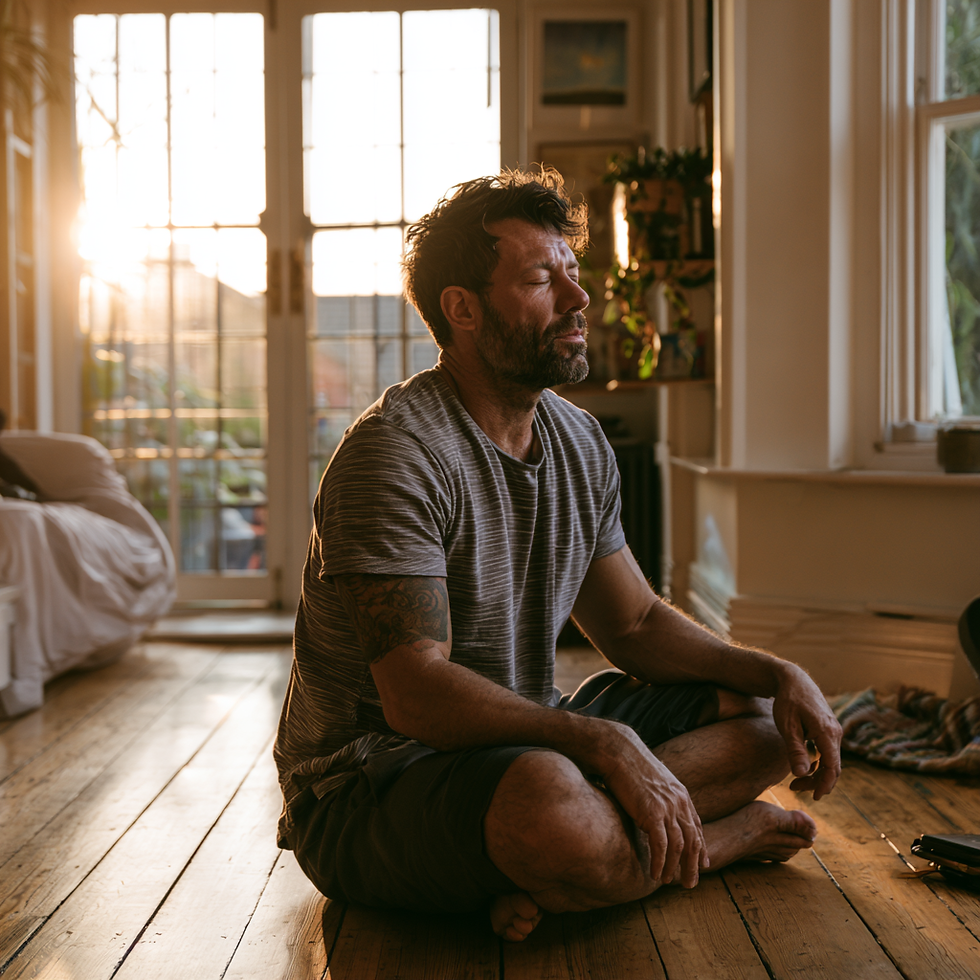
When you have times of silence or boredom, what happens? Are you drawn toward porn? Do you face cravings? Do you feel anxious or fearful?
Is it difficult for you to be alone in the home? Does this act as a major trigger, and constantly lead to relapses with porn?
Many men who are trying to quit porn find that boredom is one of their greatest triggers. It is an unwelcome guest—one that they avoid at all costs. And when it does arrive, they’re not sure what to do.
But what if boredom didn’t need to be a trigger for relapse? What if it could be a healthy part of your recovery—a welcome guest that you could sit down with and have a reasonable conversation?
What if you could stop fearing it, and start inviting it?
Today, we’re going to talk about why boredom feels so dangerous when you’re quitting porn—the psychological and neurological challenges that lead to this issue—and how to overcome it.
Also, we’ll discuss how you can actually use things like boredom and silence to fuel your recovery from porn, including five daily practices that help you increase stillness, peace, and mental wellness so that you can overcome pornography addiction.
Boredom and Porn Addiction
The strange thing about boredom is that it’s not so much the feeling itself that is the threat. Instead, it is our reaction to the feeling of boredom that is important. It is also the type of boredom that determines whether it fuels recovery, or our addiction.
Many of us who have been in porn addiction recovery programs are taught that boredom is a trigger for porn use. So we keep ourselves busy, we never allow ourselves to become triggered by empty time, and we avoid thinking because the moment we can think, we often experience cravings.
Why Boredom Feels Dangerous When You’re Quitting Porn
Boredom can feel like a threat to our sobriety. When we feel bored, we find our mind wandering into sexual fantasies, arousal, planning our next porn session, experiencing the very unpleasant bombardment of our brain with images of porn.
So, we stay as busy as possible. And why wouldn’t we? We don’t want to be triggered. We don’t want to be taken over by porn cravings. We don’t want to lose control.
Wired for Distraction
The challenge is that after years of porn use, your brain is now wired for distraction and stimulation. If there is a time of stillness or emptiness, your brain will do what it has been trained to do: fill the space with something intense.
And this goes way beyond porn use. This is the world that we live in. This is modern western society.
Corporations have monetized your attention. They want you distracted. They want you focused on your phone, scrolling social media, using their apps, watching TV. The longer they maintain your attention, the more ads you’re subjected to and the more addicted you become to their device or service.
It’s insidious.
This sets us up to become porn addicts. When I live a life of constant distraction, stimulation, entertainment, and instant gratification I eventually come to feel that I have no choice but to continue living this way. Even though this constant noise feels chaotic and painful to our brain, it’s what feels normal. We come to expect it. And if I expect a life of intense pleasure and instant gratification, then how could I not be sucked into porn?
I’ve been set up—primed to become a porn addict.
So, if a life that is overstimulating and mentally chaotic is fueling pornography addiction, what is the answer? How should we live?
The Two Types of Boredom: Idleness vs. Silence

Breaking free from porn is not as simple as emptying your life. You cannot stay sober by living an empty life.
When talking about boredom, it is important to distinguish between two “types” of boredom:
● Idleness
● Silence
Idleness fuels addiction, where silence fuels recovery.
Think of a sports car. It has a powerful engine, looks cool, and moves fast. If this car were sitting idle on a race track, and someone handed you the keys to take it for a spin, what would you want to do?
Drive it of course! That’s what’s it’s for!
This is like your sexual energy. It’s always there and it needs to be expressed.
“So, what are you saying, Jake?”, you might ask, “I need to be sexually active, and that will keep me sober from porn?”
No. I am not saying that at all. Much of the world says that, and I passionately disagree. This is because our modern culture sees sexual energy in a very narrow, inaccurate way. The contemporary view is, quite honestly, tragic.
Libido is “Life Energy”
The word “libido”---which we often think means “sexual drive”---does not mean this. The original word meant “desire” or “longing”.
In the late 19th and early 20th centuries, Sigmund Freud adapted the term into psychoanalysis to describe the psychic and emotional energy derived from primitive biological drives. While modern usage typically limits it to sexual drive, Freud and his contemporaries (like Carl Jung) originally conceptualized it much more broadly as a universal "life energy" that encompasses all human desire, creativity, passion, and survival instinct.
Our libido or sexual drive is not purely sexual. It is life energy—the energy of creation, expansion, and pursuit. And this has been known for thousands of years!
Hinduism teaches that sexual energy is life-force. Taoism teaches that it’s Chi.
These ancient religions and philosophies referred to sexual energy as the energy of creation. It can be channeled!
This energy is raw potential.
So, what does this mean for recovery?
Sexual Drive (Life Energy) Must Be Used
If I am the sports car described earlier, then I will feel a powerful drive. To do what? Live!
Dream, pursue, connect, expand, overcome, adventure.
Men are filled with testosterone—sexual drive—which is the energy of creation and pursuit. What happens when we don’t use this energy? It stands idle, and it must be expressed. If I don’t choose to express it consciously, purposefully, and through my freedom of choice, then it will be expressed unconsciously, destructively, and without my choice.
This is relapse.
Idleness leads to unexpressed energy. It is not helpful to be idle.

The Importance of Silence for Porn Recovery
So, we must use our libido—the energy of creation and pursuit—in purposeful ways each day. But does this mean we can never stop?
As I said earlier, it is painful to experience silence when we have a history of years of addiction to porn. But this is not a condemnation! Nor a reason to avoid silence altogether.
Porn addiction thrives in an internal mental environment that includes the following:
● Chaos
● Noise
● Negativity
● Anxiety
● Fear
● Anger
● Lack of presence
● Lack of focus
Addiction thrives in an environment of emotional dysregulation and nervous system overload. Recovery requires us to be busy with good things, yes, but it also requires us to regulate our dysregulation.
Porn cravings stem from a life that is not filled with enough purpose and meaning, but also a life that does not contain enough stillness. If we want to get sober, we must practice cultivating:
● Peace
● Quite
● Positivity
● Faith
● Awareness
● Compassion
● Presence
● Focus
All of this requires us to intentionally incorporate silence into our daily lives.
Initial Discomfort with Silence
When you first begin practicing silence, it can feel unbearable. You may experience:
● Cravings and fantasizing
● Negativity and self-judgment
● Anger
● Depression
● Anxiety
● Self-criticism
This happens, in part, because all of the uncomfortable thoughts and feelings that you have spent so much time stuffing down with the constant noise begin to surface.
Pornography is a means of numbing. Its intense dopaminergic release is a sedative to your brain. You’ve kept a cork on the bottle, and now that you’ve removed it, the contents are bubbling and spraying out, and it’s messy.
Long-term Benefits of Silence
When you intentionally practice silence each day, over time your thoughts and emotions grow quieter. Your internal environment becomes less chaotic. God’s love is felt more frequently and more prominently. Porn cravings decrease. You experience an increase of creativity and problem-solving. You enjoy the simple things in life more. Your passion for your role as a husband and father increases. You feel more evenkeeled and peaceful.
All of this fuels recovery from porn.
5 Ways to Use Boredom and Silence To Fuel Recovery

We wouldn’t think that something as simple as silence could make such a difference for recovery, but it does!
I recently had a client tell me that out of all the things I’ve taught him, and the habits he’s built in the coaching program, none of them can succeed if he does not take dedicated time for daily silence.
When we intentionally take time to be “bored” or silent, without other distractions or stimulation, it trains our brain into peace, focus, well-being, and ease. Porn is a means of suppressing feeling. Silence is a way of opening up to it, allowing ourselves to fully experience it, and giving ourselves room to release the excess noise so we can stay sober.
So, what are some ways that we can practice the art of silence in our everyday lives?
ONE: Contemplation
Everyday, we need time to process thought and emotion. Being human means that we have many thoughts and emotions that are unfavorable or undesired. Many of us do not give ourselves space to experience and release them. Instead, we distract with smartphones, escape through video games or porn, numb with social media reels, or attempt to control our emotions through forced optimism or ignoring what is unpleasant in favor of what is pleasant.
But none of these honor us as human beings. We are not a one dimensional person. The nervous system is incredibly complex, and the brain processes so many messages. We often judge ourselves for negative, judgmental, or hateful thoughts. When we do this, we ignore the fact that these are just a part of life.
When we try to escape or control what is painful, we don’t decrease its power, we increase it. Our resistance fuels continued suffering.
As the famous Carl Jung once said: “What you resist, persists”.
Give yourself time each day to simply sit, walk, or drive in silence. Even for 5 or 10 minutes. Heck, even 2 or 3 minutes. Do what you can. You need undistracted time to decompress and release what you are feeling and thinking.
The flow of emotion goes on. If you dam it, eventually that dam will leak. If you continue, leaks become fissures, and fissures spread, becoming a total collapse.
As the Buddhist Thich Nhat Hanh once said: “We have to learn to accept all the positives and negatives in that stream of continuum. Like a river which has its water coming from many creeks and waterways. Sometimes we see as the river flows, one side is clear water, and another side, muddy water. We have to accept both.”
TWO: Technology-Free Time
This is an absolutely crucial and very powerful part of overcoming porn addiction. Not only does having technology-free time each day decrease your access to the devices on which you may act out, but more importantly it decreases the distractedness and lack of presence that are quintessential aspects of an addicted mind.
Smartphones, video games, and TV drain your dopamine and train you to expect instant gratification and quick stimulation. While you don’t need to be completely free of these devices 100% of the time, having times where you do not use them during the day—consciously scheduled technology breaks—will pay dividends when it comes to balancing your emotions and calming your nervous system.
A dysregulated nervous system seeks distraction and intensity. A regulated one doesn’t need them.
THREE: Prayer or Meditation
Taking time to pray or meditate each day is foundational for every single client that I’ve had that has remained sober and happy long-term, with almost no exception. Does this mean that you have to do this everyday to stay sober? No. But, man, does it make it easier!
To stay sober, we must make sacrifices. This is a biblical truth and a psychological one. You cannot get sober without sacrificing entertainment, noise, pleasure, or doing things that you want to do in favor of doing what’s necessary to feel stable, regulated, and peaceful.
For me, prayer is powerful. Why? It helps me…
Emotionally regulate and release stress
Feel more positive and grateful
Think more about others rather than myself
And, most importantly, connect with a power greater than myself
FOUR: Silence with Loved Ones

Silence doesn’t have to be literal. It can be a quietness of mind and heart. Part of this is the silence we share with family and friends.
Take time to listen, show compassion, give empathy, and be present with your wife and kids. Show them that you care not by saying the exact right words, being constantly exciting, or fixing what they’re going through, but by simply sharing a quiet moment of seeing each other.
FIVE: Breathe
As my friend and colleague Drew Boa says: “Breath is our superpower.” We often overlook the power of deep breathing, paying attention to breath, and being present. In our current age, we can dismiss this as ancient and outdated, as if our current knowledge is somehow superior to the study and expertise of wise men who spent ages learning, experimenting, and honing to develop these approaches.
I recommend 4-8 breathing (4 seconds in the nose, 8 seconds out the mouth) or the Wim Hof Breathing Technique, which is a brilliant 10-minute breath practice you can find online, and has changed my life.
Boredom is a Friend of Recovery When Used Correctly
I hope that these insights on boredom and quitting porn have been a huge blessing to you. If you want to take these practices far deeper, I recommend joining The No More Desire Academy where we practice these things together. I provide you with course videos, exercises, reflections, and a group to connect with each week. You can also explore 1-on-1 coaching with me to develop a personalized plan for you to quit porn, along with a step-by-step process to get sober. You’ll find both at nomoredesire.com/coaching.
Visit No More Desire Tools for Recovery for recovery tools and training, including my free eBook, Workshop, The RAIL Method ™ and more to help you break free from porn.
If you’re tired of trying to quit porn on your own, the No More Desire Academy gives you a structured path to recovery through coaching, brotherhood, practical tools, and step-by-step training. Learn more about the Academy.
If you want deeper, more personalized support, I also offer 1-on-1 porn addiction recovery coaching. We’ll work directly on your patterns, emotional triggers, recovery plan, and long-term growth. Learn more about working 1-on-1 with Jake Kastleman.
Recommended Episodes:
Full Transcript of Episode 154: Why Boredom Feels So Dangerous When You’re Quitting Porn — And 5 Ways to Use It as a Secret Weapon
Jake Kastleman (00:00.182)
Welcome to No More Desire, where we build a mindset and lifestyle for lasting recovery from porn. My name's Jake Castleman and I'm excited to dive in with you. Let's get started, my friend.
Jake Kastleman (00:16.654)
When you have times of silence or boredom, what happens? Are you drawn toward porn? Do you face cravings? Do you feel anxious or fearful? Is it difficult for you to be alone in the home? Does this act as a major trigger and constantly lead to relapses with porn? Many men who are trying to quit porn find that boredom is one of their greatest triggers. It is an unwelcome guest, one that they avoid at all costs, and when it does arrive, they're not sure what to do. But what if boredom?
Didn't need to be a trigger for relapse. What if it could be a healthy part of your recovery? A welcome guest that you could sit down with and have a reasonable conversation with? What if you could stop fearing it and start inviting it? Today, we're going to talk about why boredom feels so dangerous when you're quitting porn, the psychological and neurological challenges that lead to this issue, and how to overcome it. Also, we'll discuss how you can actually use things like boredom and silence to fuel your recovery from porn.
Including five daily practices that help you increase stillness, peace, and mental wellness so that you can overcome pornography addiction. Before we dive in, please like, rate, and follow this podcast. It's a huge help to my team and the growth of this show. And it helps us bring you the latest in porn addiction recovery and personal growth. All right, let's get started.
Boredom is something that I struggled with majorly in my own recovery journey. When I used to be addicted to pornography, masturbation, video games, and a host of other things, I struggled with silence and boredom in my life. I was constantly trying to distract myself. I was always busy. I was always needing something to keep my mind occupied. And the strange thing about boredom is that it's not so much the feeling itself.
That is the threat. It's actually our reaction to the feeling of boredom that is important and how we engage with boredom. And, you know, what do we actually do with it when it's here? And what type of boredom is it, which we're going to talk about today. This determines whether boredom can actually fuel recovery or whether it's going to fuel addiction and relapse. Many of many of us have been in porn addiction recovery programs.
Jake Kastleman (02:41.644)
That teach that boredom is a trigger for porn use. So we keep ourselves busy. We never allow ourselves to become triggered by empty time and we avoid thinking because the moment that we think, we often experience cravings. So we try to keep ourselves occupied and continuously busy. Boredom can feel like a threat to our sobriety. Silence can feel like an invitation for cravings to come in. When we feel bored,
We find our mind wandering into sexual fantasies, arousal, planning our next porn session, experiencing the very unpleasant bombardment of our brain with images of porn. I remember exactly how this was for me. It always felt that way. It felt like I just many times I thought, if I can just stay busy all of the time, if I can just keep my mind occupied all the time, if I can just always pray or always be singing a hymn in my head, or
I can always be serving or I can always be doing something that's good, then I finally will stay sober. And there's a lot to be said about staying busy with good things. We want that. And I'm going to talk more about that. But there's also so much to be said about silence or boredom in our lives and how crucial it is for recovery, how we can actually use it as a secret weapon for our recovery. So we're going to talk, we're going to break all that down today. We stay as busy as possible.
When we are in addiction. And why wouldn't we? We don't want to be triggered. We don't want to be taken over by porn cravings. We don't want to lose control. The challenge is that after years of porn use, the thing is your brain is now wired for distraction and stimulation. If there is a time of stillness or emptiness, just like I was saying with my experience, your brain will do what it has been trained to do. Fill that space with something intense.
And that leads to the fantasy. That leads to the cravings. And this goes way beyond porn use, by the way. This is the world that we live in, my friends. This is modern Western society. If I may jump on my soapbox, corporations have monetized your attention. They want you distracted. They want you focused on your phone, scrolling social media, using their apps, watching TV. The longer they maintain your attention, the more ads you're subjected to.
Jake Kastleman (05:05.526)
And the more addicted you become to their device or service. It is insidious. It is divisive, whether that's intentional or not. This sets us up to become addicts of all sorts of things. Dopamine addicts. When it comes to the book Dopamine Nation by Dr. Annalemke, I think she really spells this out very, very well. We are a society of dopamine addicts. But more specifically, this also sets us up to become porn addicts.
When I live a life of constant distraction, stimulation, entertainment, and instant gratification, I eventually come to feel that I have no choice but to continue living this way. Again, I speak from personal experience on this, my friend. This was terribly, terribly painful for me to deal with. I felt that I had no choice but to.
continuously entertain myself, stay distracted, use my smartphone, use TV, use video games, use porn, everyday masturbation, junk food. I felt like I was a slave to these things. And for many years, I did not realize that I was a slave to these things. I thought I was just living the life that I wanted to live until I realized it felt I did not have a choice and I started to aim my sights higher. I wanted to become a better person. I wanted to do greater things.
And then I couldn't because I didn't have the focus. I didn't have the motivation. I didn't feel the drive that I wanted. And my entire program, No More Desire, back when it was Become a Good Man, I actually designed it originally as a program to build focus and motivation. That was one of the first versions. And then I converted it over to a porn addiction recovery course because I realized that the approach
To build focus and motivation and dopamine, dopamine power, the power of pursuit and drive and focus in my life, was the very same way to overcome pornography addiction. So even though this constant noise feels chaotic in our lives, it feels painful to our brains, it's what feels normal to us. It felt normal to me. It felt like something I needed. I came to expect it. And if I expect a life,
Jake Kastleman (07:28.085)
of intense pleasure and instant gratification, then how could I not be sucked into porn? That is what occurred to me, and that is where everything became connected. What was taking my focus and motivation, the time I was spending on TV, the time I was spending on video games, my diet, my exercise regimes, my relationships, all of it became tied to how susceptible I was to pornography addiction. And I began to realize to overcome porn,
I must change my lifestyle and my mindset in all these areas. We have been set up, my friends, primed to become porn addicts. Whether intentional on people's parts or not, that is the society that we live in in so many ways. I'm not saying there aren't good things, not saying there aren't things to be really encouraged about, and so many wonderful people and amazing things. I'm very, very grateful for our society and for our con our
Life these days in so many ways, but I am s also s very discouraged and very saddened and very hurt by the constant suffering that I see around me and the dystopian mind type of society that we seem to have in so many ways. And I think you know what I'm talking about. The depression, the anxiety, the ADH ADHD, in other words, issues with focus and motivation. So many of us struggle with comorbid mental disorders, and we don't know why.
There are many, many reasons behind it, and it is all connected with what makes us more susceptible to pornography addiction. So if a life that is overstimulating and mentally chaotic is fueling pornography addiction, then what is the answer? How should we live? Breaking free from porn is not as simple as emptying your life. It's not what I'm here to tell you. You cannot stay sober by living an empty life. When talking about boredom,
It is important to distinguish between two types of boredom. So let's talk about that. There's idleness and there's silence. These two things can feel boring, but they're very, very different. And we're going to talk about that. Idleness, first off, fuels addiction. Whereas silence, on the other hand, fuels recovery. I want you to think of a sports car. I'm going to make an analogy. It has a powerful engine, it looks cool.
Jake Kastleman (09:47.808)
It moves fast. If this car were sitting idle on a racetrack and someone handed you the keys to take it for a spin, what would you want to do? You want to drive it, of course, right? That's what it's for. This is like your sexual energy, and idleness does not serve it well. Sexual energy is always there and it needs to be expressed. So you might say, What are you saying, Jake? You might ask, Do I just need to be sexually active and that's what's going to keep me sober from porn?
No, that's not what I'm telling you. Everybody and their dog these days say stuff like that, that you just have sexual drive. You must have an overactive sex drive, and so you need a lot of sex. If your wife just gives you enough sex, or your girlfriend or partner or whoever just gives you enough sex, then you won't want porn. That is so false and so wrong in so many ways because of our very narrow focus on things like debate.
libido and sexual energy, our deep misunderstanding of what libido and sexual energy are. Much of the world says this. And it's because our modern culture sees sexual energy in a narrow and accurate way. The contemporary view is tragic, quite honestly. Let me tell you about what libido and sexual energy actually are, according to ancient wisdom and modern wisdom, from many, many different sources. The word libido
which we often think means sexual drive, does not mean that. The word originally meant desire or longing. In the late 19th and early 20th centuries, Sigmund Freud adapted the term into psychoanalysis to describe the psychic and emotional energy derived from primitive biological drives. While modern usage typically limits it to sexual drive
Freud and his contemporaries, like Carl Jung, a brilliant psychologist, originally conceptualized it much more broadly as a universal life energy that encompasses all human desire, creativity, passion, and survival instinct. Let me say that one more time. Carl Jung, Sigmund Freud, people that we Sigmund Freud specifically, who we often think about as the sex guy, like it was all about sex for him, he conceptualized.
Jake Kastleman (12:12.448)
Libido, much more broadly, as life energy. It encompasses all human desire, creativity, passion, and survival instinct. This is huge, guys. I cannot say enough about this. This took me years to learn. So please pay attention to this. This is absolutely crucial for your recovery. Our libido or our sexual drive is not purely sexual.
It is far more broad than that. It is life energy, the energy of creation, expansion, pursuit, and this has been known for a long time. How long? Thousands of years. Hinduism teaches that sexual energy is life force. Taoism teaches that it is qi. These ancient religions and philosophies referred to sexual energy as the energy of creation. It can be channeled.
This energy is raw potential, not purely sexual. When you feel a craving for pornography or sex, when you feel a desire for sexual arousal, this is showing you that you have a desire for pursuit, for creation, for expansion, for purpose, for meaning, for service, for impact. We interpret as it as sexual.
That's up here. That's habits formed in your brain. But it is so much more broad and beautiful than that. It is so much more impactful and powerful than that. It is not something that you want to get rid of or diminish. I used to feel like I just want to get rid of my sexuality. I don't want to feel this way anymore because I felt so out of control. Maybe you can relate to that. I wanted it to go away, but you can't make it go away. You need to learn how to build habits of.
Channeling it into things. And that can feel impossible in the beginning. It can feel unreachable. It can feel like, Jake, that's not how it works. For me, I feel a sexual craving that's overwhelming. And I get that. And we'll talk about more about nervous system dysregulation and how that plays into this. But we need to build the habit of channeling this energy. So what does this mean for recovery? If I am the sports car described earlier, let's say, then I will feel a powerful drive.
Jake Kastleman (14:34.53)
To do what? To live, to dream, to pursue, connect, expand, overcome, adventure. We men are filled with testosterone, sexual drive, which is the energy of creation and pursuit. What happens when we don't use this energy, my friends? It stands idle. It must be expressed. If I don't choose to express it consciously, purposefully, and through my freedom of choice, then it will be expressed unconsciously, destructively.
And without my choice. To express it consciously, I must channel this life energy and energy of creation that is not only sexual into things of meaning, of purpose, of peace, of joy, of service. This can sound so cliche, but I promise you it's extremely important and it's totally possible. It just takes practice. When it is channeled in destructive ways without my choice, it becomes relapse.
When it is channeled consciously, it becomes my greatest life force for joy and creation. This is possible for you. A quick pause for just a couple minutes. There are a lot of men who feel discouraged by some of the recovery programs or therapy services out there. Maybe you are this way as well. Tell me if this sounds familiar to you. You show up to a one-on-one session, someone asks you how your week went, you talk about your problems, maybe you talk about your relapses, and
Perhaps get a bit of advice or a listening ear, but you don't really feel like you are being given any sound tools to use throughout the week, throughout each day. This is not to say that these aren't well-meaning professionals or that they don't do a lot of good for you, but to overcome porn, you need a sound structure. Many of the men in my program who've tried traditional therapy routes or other services find something different in this program. I provide a step-by-step structure that guides you in building habits and tools for your recovery.
I provide you with 10 to 15 minute daily practices to build emotional resilience and work through cravings, an entire online course library that I've worked on for years with short lessons and applied exercises. In the program, you will learn practices derived from CBT, IFS, neuroscience, nutritional psychology, faith philosophy, and I help you apply each teaching to your everyday life through reflections, worksheets, and instructions. It's all about that application, guys. For guys who
Jake Kastleman (16:59.794)
Are you looking for a higher level of support? I provide weekly one-on-one coaching to build personalized plans for your specific situation. I also instruct you in meditation practices in session to work through cravings and emotions and to train yourself to do this so that when they come up, you'll know what to do. Many men find this extremely helpful. In addition to all this, you don't do things alone. You are part of a private online community.
And meet with a weekly group to connect with other men who are on the same journey. It's a really awesome culture. At No More Desire, you're not just getting sober, you're designing a life that you love. So to learn more about the program, go to nomoredesire.com/slash coaching. All right, back to the show. Idleness leads to unexpressed energy. It is not helpful to be idle. So we must use our libido, the energy of creation and pursuit, in purposeful ways each day.
But does this mean that we can never stop, that we can never take a break? As I said earlier, it is painful to experience silence when we have a history of years of addiction to porn. But this is not a condemnation, my friend. I used to feel that way myself. For years I thought I'll just never be able to be silent. This is not a reason to avoid silence altogether. You have to meet yourself where you're at. Sometimes your mind is so chaotic.
All you can do is just stay busy with good things and try not to think. But over time, you can practice silence. Porn addiction thrives in an internal mental environment that includes chaos, noise, negativity, anxiety, fear, anger, lack of presence, lack of focus. Not that all these things necessarily lead to relapse or we need to avoid any of these feelings altogether. I'm not saying that.
But that internal environment feels overwhelming. So we seek escape. We are dysregulated. Our nervous system is overloaded. Addiction thrives in this kind of environment. So we need to cultivate an environment of quiet, of silence. Recover recovery requires us to be busy with good things. Yes. But it also requires us to regulate. We need to regulate what is dysregulated. P**n cravings stem from a life.
Jake Kastleman (19:20.014)
That is not filled with enough purpose and meaning, but also a life that does not contain enough stillness. Be still and know that I am God. We need to be still. We need to find time for daily stillness in order to find recovery. If we want to get sober, we must practice peace and quiet, positivity, faith, awareness, compassion, presence.
And the ability to focus for longer periods of time than a few seconds or a few minutes. Again, things like social media, video games, and television, programs that are intense, violence, sexual, all of these things train our brains for instant gratification, constant entertainment, and overstimulation. I did an episode on the overstimulated man a while back. You can check that out. It talks much more about this.
In order to gain a mind that can intentionally incorporate silence into our daily lives, we must practice. When you first begin practicing, it feels unbearable. You may experience cravings, fantasizing, negativity, self-judgment, anger, depression, anxiety, self-criticism. This happens in part because all of the uncomfortable thoughts and feelings that you've spent so much time stuffing down.
Would the constant noise begin to surface? Again, I speak from personal experience. This is what it was like for me. Pornography is a means of numbing. Its intense dopaminergic release is a sedative to your brain. You've kept a cork on the bottle, and now that you've removed it, the contents are bubbling and spraying out, and it's messy. When you intentionally practice silence each day, over time your thoughts and emotions grow.
Quieter, your internal environment becomes less chaotic. God's love is felt more frequently and prominently. And that's freedom, man. Porn cravings decrease. You experience an increase of creativity and problem solving. I will say that's one of the biggest surprises to me in cultivating the silence in my life.
Jake Kastleman (21:41.974)
was my increased creativity and ability to solve problems, that I would actually solve problems during times of silence. Much like you can do during sleep. We are created for having those times of silence. We are meant to have them. We're designed to be that way. And we live in a culture that really gives us no opportunities for that unless we consciously create them.
You enjoy the simple things in life more when you take time for silence. Your passion for your role as a husband and father increases. Yet another thing that surprised me. You feel more even keeled. You feel more peaceful. And all of this fuels recovery from porn. We wouldn't think that something as simple as silence could make such a difference for recovery, but it does.
I recently had a client tell me that out of all the things that I've taught him and the habits that he's built in the coaching program, none of them can succeed if he does not take time for the dedicated silence that I have spoken to him about, coached him on in our one-on-one sessions, talked about in the groups. When we intentionally take time to be bored or silent without other distractions or stimulation, it trains our brain into peace, focus, well-being, ease. Porn is a means of suppressing feeling.
Silence is a means of opening up to it, allowing ourselves to fully experience feeling and giving ourselves room to release the excess painful feelings or the noise. And this enables sobriety. So, what are some ways that we can practice the art of silence in our daily lives? Number one, contemplation. These are the five ways that I said I would give you.
Contemplation. Every day we need time to process thought and emotion. Being human means that we have many thoughts and emotions that are unfavorable or undesired. Many of us do not give ourselves space to experience and release them. Instead, we distract with smartphones, escape through video games or porn or TV, numb with social media reels, or attempt to control our emotions through forced optimism.
Jake Kastleman (24:01.164)
Or ignoring what is unpleasant in favor of only paying attention to what is pleasant. But none of these honor us as human beings, my friends. We are not one-dimensional. The nervous system is incredibly complex. Our thoughts and emotions are incredibly complex, and the brain processes so many messages. We often judge ourselves for feeling negative, judgmental, or hateful. When we do this, we ignore the fact that these are just part of life.
When we try to escape or control what is painful, we don't decrease its power, we increase it. Our resistance fuels continued suffering. As the famous Carl Jume once said, what you resist persists. Instead, we need to give ourselves time each day to simply sit, walk, drive, in silence. Even for five or ten minutes. Heck, even two or three minutes if that's what you can ma if that's what you can manage.
Do what you can. You need undistracted time to decompress. Release what you're feeling and thinking. The flow of emotion goes on, my friends. If you dam it, eventually that dam is going to leak. If you continue, leaks become fissures, fissures spread, and they become a total collapse. And that looks like relapse. As the Buddhist TikNot Han once said, Love this guy.
He said we have to learn to accept all the positives and negatives in that stream of continuum. Like a river which has its water coming from many creeks and waterways. Sometimes we see as the river flows, one side is clear water and another side is muddy water. We have to accept both.
Number two, technology free time. This is an absolutely crucial and very powerful part of overcoming porn addiction. I cannot say enough about it. I have an extreme passion for it. If you do not know by now, you will know if you follow this podcast. Not only does having technology-free time each day decrease your access to the devices on which you may act out, but more importantly, it decreases the distractedness and lack of presence.
Jake Kastleman (26:21.294)
That are quintessential aspects of an addictive mind. Smartphones, video games, TV, these drain your dopamine and train you to expect instant gratification and quick stimulation. While you don't need to be completely free of these devices, 100% of the time, having times where you do not use them during the day consciously scheduled in, technology breaks, this will pay dividends when it comes to balancing your emotions, calming your nervous system.
A dysregulated nervous system seeks distraction and intensity. A regulated one doesn't need these things, or at least less so. Number three, prayer or meditation. Taking time to pray or meditate each day is foundational for every single client that I've ever worked with that has remained sober and happy long term, with almost no exception. Does this mean that you have to do this every day to stay sober? No. But man, does it make it easier?
It helps so much. To stay sober, we must make sacrifices, brother. This is a biblical truth, and a psychological one as well. Imagine that. You cannot get sober without sacrificing. Sacrificing entertainment, noise in your life, pleasure, or doing things that you want to do in favor of what's necessary to feel stable, regulated, and peaceful. By the way, I'm not saying that you have to live a pleasure-free life.
There's a difference between noble versus base pleasure. And having some things that are pleasurable in balance is great. But that balance, I think, is really misinterpreted in our current day and age. So I really on err on the side of pursue things that bring you meaning and peace and joy, and put away the things that are overstimulating and giving you excess excess pleasure. For me, prayer is powerful. Why?
It connects me with God. It helps me emotionally regulate and release stress. Feel more positive and grateful. Think more about others rather than myself. And most importantly, connect with a power that's greater than myself. Okay, number four, silence with loved ones. Silence doesn't have to be literal. It can be a quietness of mind and heart. Part of this is the silence we share with family and friends. Take time to listen.
Jake Kastleman (28:47.254)
Show compassion, give empathy, and be present with your wife and kids. Show them that you care, not by saying the exact right words necessarily being constantly exciting or entertaining or by fixing what they're going through, but by simply sharing a quiet moment of seeing each other. Okay, that's part of silence. Five. Before I move on to five, actually, let me say you also need to do this for yourself. Self-empathy.
Self-compassion is extremely powerful. Okay, number five, breathe. As my friend and colleague Drew Drew Boas says, breath is our superpower. We often overlook the power of deep breathing, paying attention to breath, being present. In our current age, we can dismiss these things as ancient and outdated.
As if our current knowledge is somehow superior to the study of ex an expertise of wise men who spent ages learning, experimenting, and honing to develop these approaches. They knew what they were talking about. And our current modern science does not negate the things that they found. If you can't tell, I feel very emotional about this. I recommend four-eight breathing, as I call it. It goes by multiple names. That's what I call it. Because it's easy to remember. Four seconds in the nose, eight seconds out the mouth for eight rounds. Or
The Wim Hof breathing technique, which is a brilliant 10-minute breathing practice. I started about three years ago. It's a breathing practice that you can find online. You can find it on YouTube. I'm sure you can find it in other places. It's easy to find there. Wim Hof Breathing Technique Technique, W-I-M-H-O-F. This technique changed my life. It's an incredibly powerful way to calm down the body and mind, calm down the nervous system, especially if you're experiencing anger or heightened emotion or you're starting to experience cravings.
10 minutes. You don't have to do any special thinking strategies or anything like that. It's not complex. Just follow the regimen. Follow the instructions. It's 30 rapid breaths, followed by holding your breath. And then essentially you repeat that three times. Sounds too simple to make a difference. It makes a huge one, though. Again, I've been practicing it for years. I love it. It continues to help me to this day.
Jake Kastleman (31:06.934)
I hope these insights on boredom and quitting porn have been a huge blessing to you. If you want more help, check out my free ebook or free workshop on nomordesire.com. If you want to take these practices far deeper, I recommend joining the No More Desire Academy, where we practice these things together. I provide you with course videos, exercises, reflections, and a group to connect with each week.
If you want to go deeper, you want to go into an accelerated space, you can explore one-on-one coaching with me to develop a personalized plan for you to quit porn that you can carry with you the rest of your life, along with a step-by-step process that you follow to get sober. You will find both of these, both the group coaching, the academy, in other words, and one-on-one coaching at nomordesire.com slash coaching. God bless and much love, my friend.
Thanks for listening to No More Desire. It's a genuine blessing for me to do the work that I do, and I wouldn't be able to do it without you, my listeners, so thank you. If you've enjoyed today's episode, do me a favor: follow this podcast, hit the notification bell, and shoot me a rating. The more people who do this, the more men this podcast will reach. So take a few minutes of your time and hit those buttons. And if you want to take your sobriety to the next level, check out my free workshop, The Eight Keys to Lose Your Desire for Poem.
Or my free ebook, The Ten Tools to Conquer Cravings. These are specialized pieces of content that will give you practical exercises and applied solutions to overcome porn addiction. And you can find them at NomorDesire.com. As a listener of the No More Desire podcast, you are part of a worldwide movement of men who are breaking free of porn to live more impactful, meaningful, and selfless lives. So keep learning, keep growing, and keep building.
That recovery mindset and lifestyle. God bless.
Jake Kastleman (33:15.712)
Everything expressed on the No More Desire podcast are the opinions of the host and participants, and is for informational and educational purposes only. This podcast should not be considered mental health therapy or as a substitute thereof. It is strongly recommended that you seek out the clinical guidance of a qualified mental health professional. If you are experiencing thoughts of suicide, self harm, or a desire to harm others,
Please dial nine one one or go to your nearest emergency room.


Online communication (รับงานสมุทรปราการ) has transformed the way people build relationships, making it possible to stay connected across distance, time zones, and busy schedules. Through messages, video calls, voice notes, and social platforms, couples and friends can share daily moments, express feelings, and maintain emotional closeness even when they are far apart. This kind of relationship depends on honesty, consistency, and clear communication. While digital connection cannot replace every part of face-to-face interaction, it offers a powerful way to nurture trust, understanding, and support. In today’s world, online communication plays an important role in keeping relationships alive and meaningful.